
Affiliate Disclosure: SmartSpaceAdvisor.com is a participant in the Amazon Services LLC Associates Program. We may earn a commission when you buy through our links at no extra cost to you. Our recommendations are always based on honest research — never paid placements.
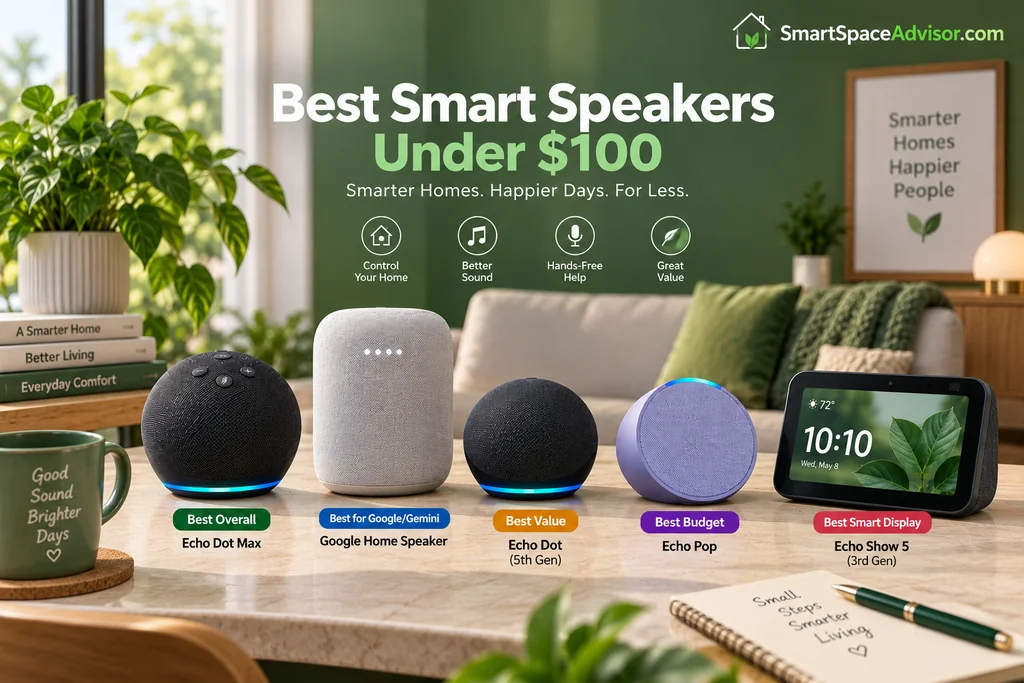
You don’t need to spend hundreds of dollars to add useful voice control, music and smart-home automation to your home.
The best smart speakers under $100 can control lights, plugs, thermostats and other compatible devices, while also handling music, timers, routines and everyday questions. The bigger decision in 2026 isn’t simply which speaker sounds best — it’s whether Alexa or Gemini for Home makes more sense for your smart home.
After comparing the strongest current options around this price, the Amazon Echo Dot Max is our best overall pick when it’s selling for $100 or less. The Google Home Speaker is the better choice for Google Home and Gemini users, while the regular Echo Dot remains our favorite value option.
Quick verdict: Get the Echo Dot Max if it’s $100 or less and you want the best combination of sound and smart-home capabilities. Choose the Google Home Speaker for Gemini and Google Home, or the Echo Dot if you want Alexa for less.
Best Smart Speakers Under $100: Quick Comparison
| Product Image | Product Name | Best For | Assistant | Sound Setup | Smart-Home Hub | Price Position | Where to buy? |
|---|---|---|---|---|---|---|---|
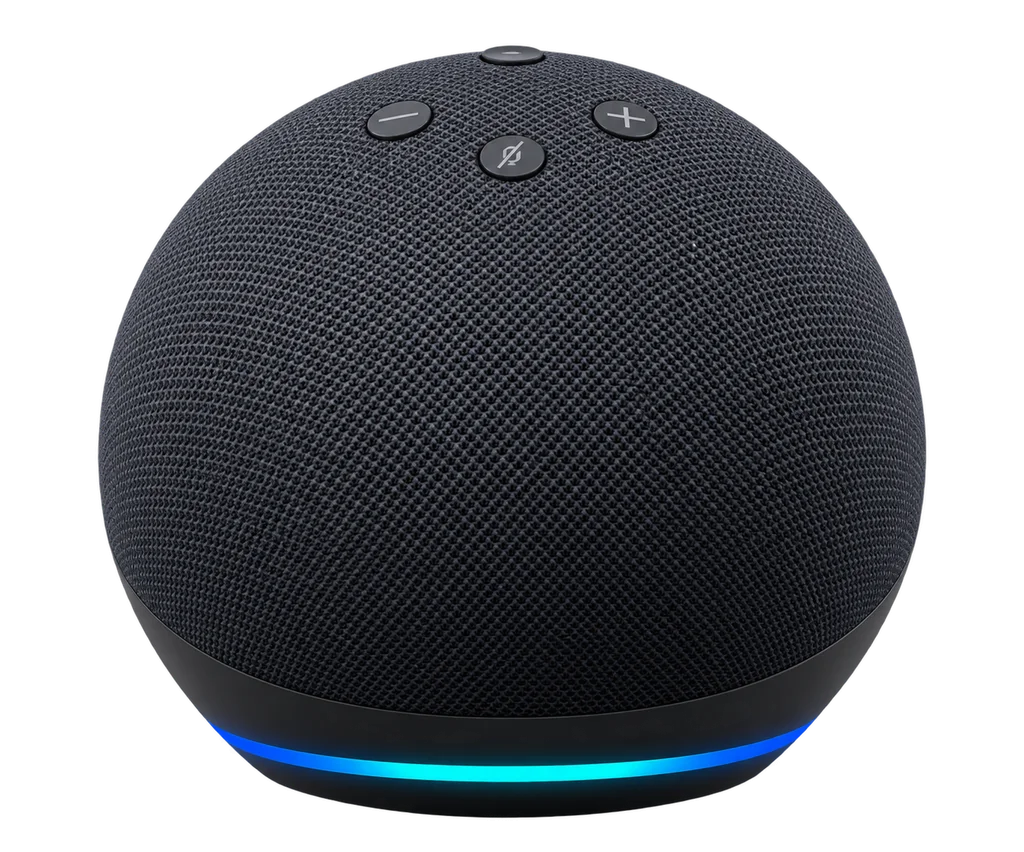 | Amazon Echo Dot Max | Best Overall | Alexa / Alexa+ | Woofer + tweeter | ✓ | ≤$100 when on sale | View on Amazon |
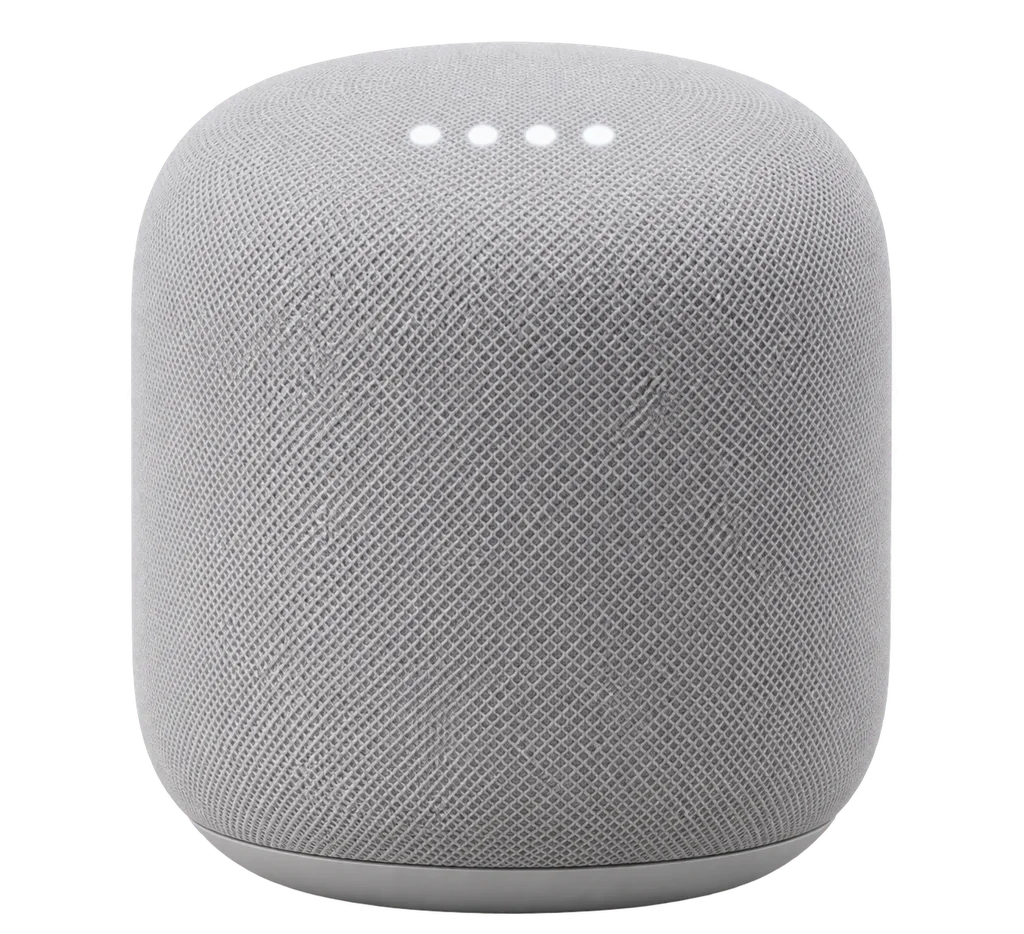 | Google Home Speaker | Best for Google Home | Gemini for Home | 58mm full-range driver | ✓ | $99.99 | View on Amazon |
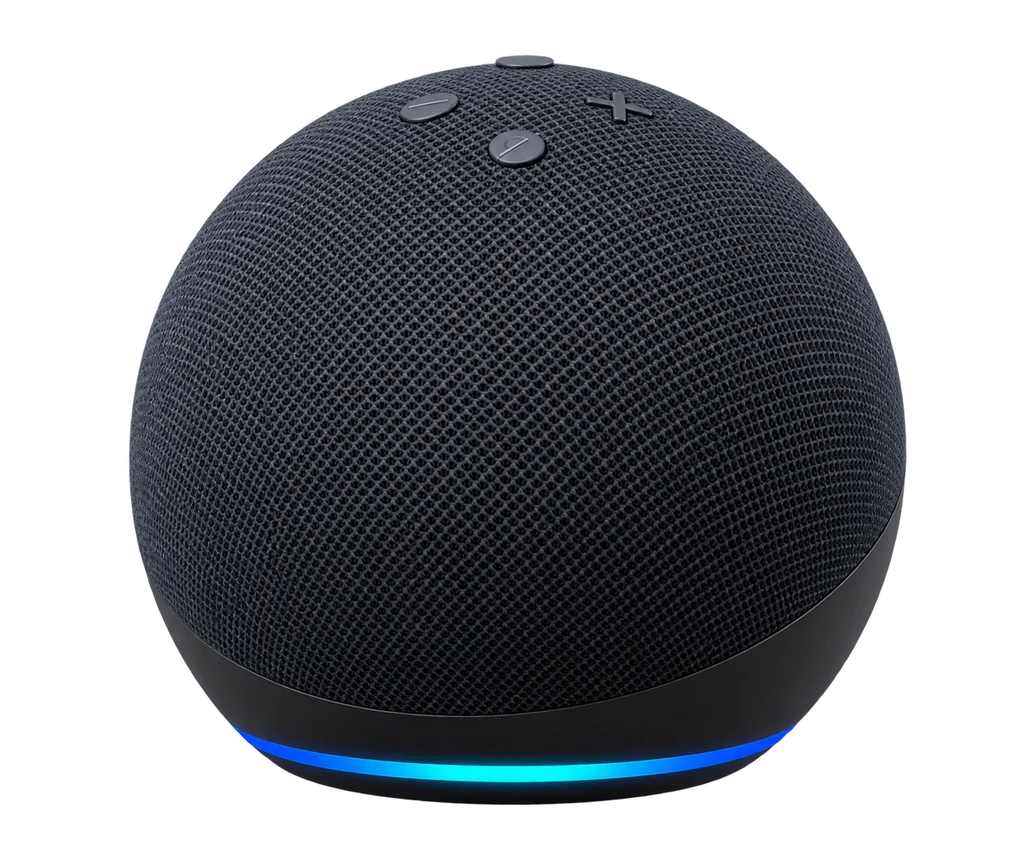 | Amazon Echo Dot (5th Gen) | Best Value | Alexa | 1.73″ front-firing speaker | Limited* | Under $100 | View on Amazon |
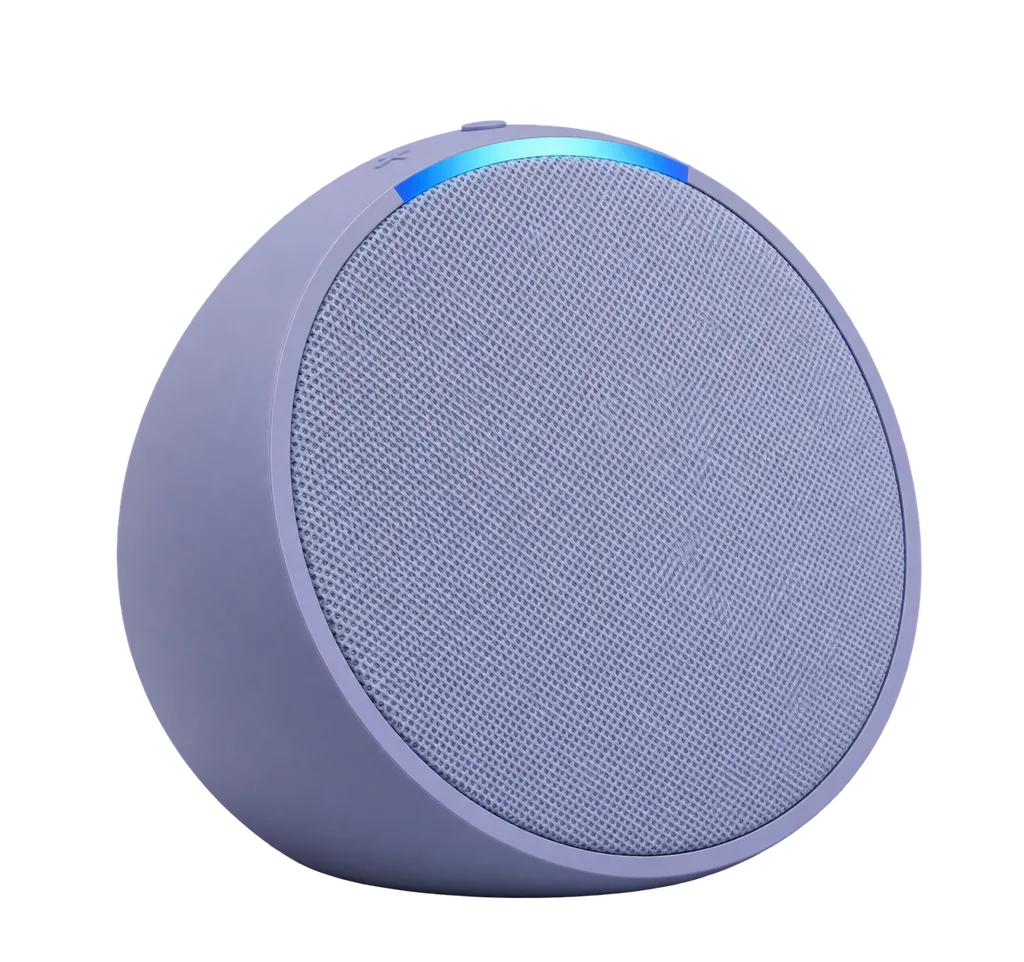 | Amazon Echo Pop | Best Budget | Alexa | 1.95″ front-firing speaker | Limited* | Under $100 | View on Amazon |
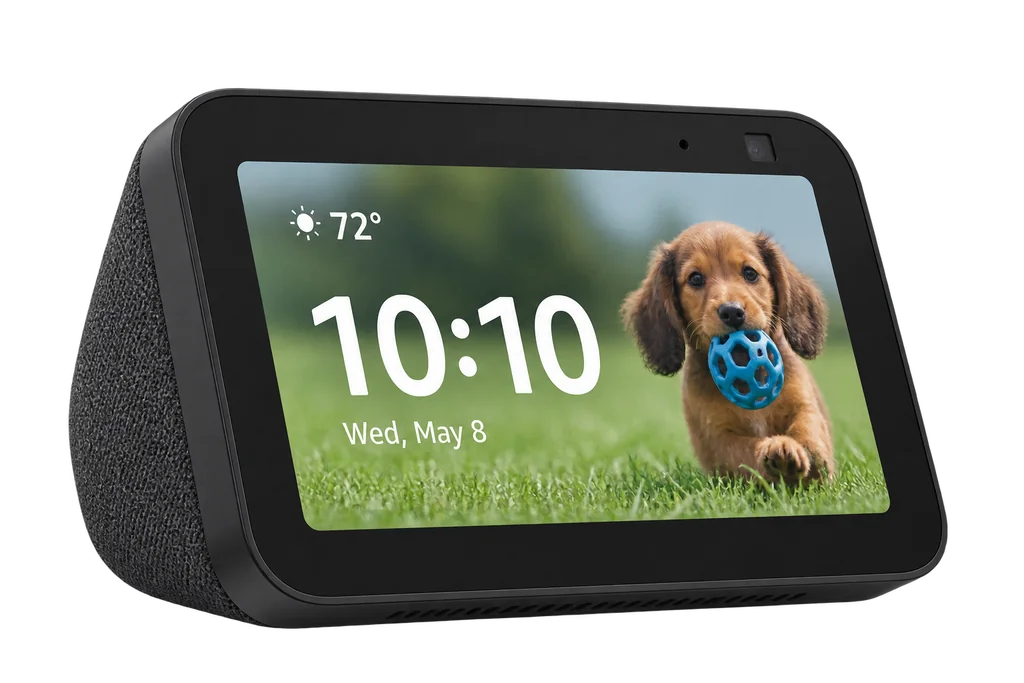 | Amazon Echo Show 5 (3rd Gen) | Best Smart Display | Alexa | 1.75″ full-range speaker | Limited* | Around $100 | View on Amazon |
How We Chose the Best Smart Speakers Under $100
A smart speaker isn’t just an audio product. For a connected home, it can also become an important control point for lights, plugs, thermostats, cameras, doorbells and routines.
That’s why we evaluate these products differently from ordinary Bluetooth speakers.
Smart-Home Compatibility
We consider how well each speaker works with compatible smart-home products and whether it supports newer standards such as Matter and Thread.
A speaker with broader smart-home capabilities can remain useful long after the novelty of asking a voice assistant questions wears off.
Voice Assistant
Alexa and Gemini for Home offer different experiences.
We consider everyday commands, smart-home control, routines, conversational capabilities and how well each assistant fits its surrounding ecosystem.
Sound Quality
You shouldn’t expect audiophile performance from a compact sub-$100 smart speaker, but there are still significant differences.
We consider whether a product is suitable primarily for voice responses and podcasts or capable enough to serve as the main music speaker in a bedroom, kitchen or living room.
Smart-Home Hardware
Some smart speakers do more than connect to Wi-Fi.
Matter controllers, Thread border routers, Zigbee connectivity and environmental sensors can make a speaker significantly more useful when building a connected home.
Value
A $40 speaker doesn’t need to outperform a $100 speaker.
It needs to provide better value for the person it’s designed for.
That’s why our rankings include separate recommendations for overall performance, value and budget buyers.
Long-Term Usefulness
We favor current products and actively supported ecosystems rather than filling the list with discontinued speakers simply because old inventory can occasionally be found cheaply.
How We Evaluate Smart Home Products
SmartSpaceAdvisor buying guides combine manufacturer specifications, current pricing and availability, product documentation, feature comparisons, independent testing and practical smart-home considerations.
When a product has been physically tested by SmartSpaceAdvisor, we identify that experience clearly. Products we haven’t personally tested are evaluated using manufacturer documentation, independent testing and other reliable information rather than pretending we conducted hands-on testing.
Because smart-home pricing and software features can change, particularly during promotional events, we recommend checking the current price and compatibility before purchasing.
Our Top Picks
1. Amazon Echo Dot Max — Best Overall
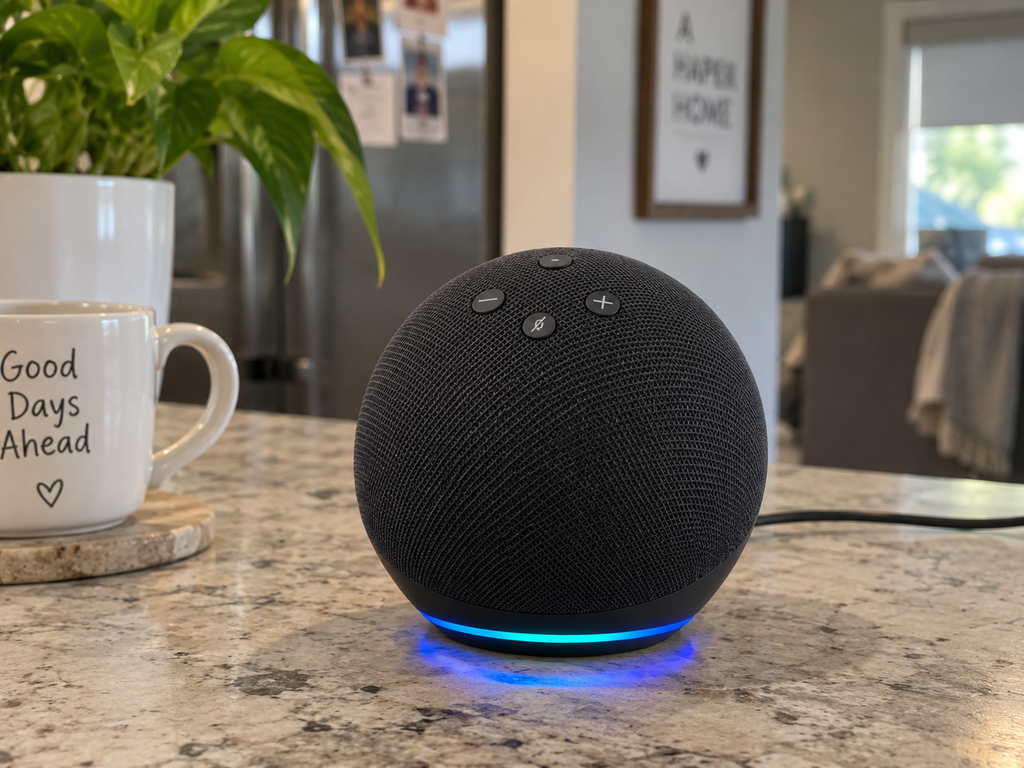
Best for: Alexa households, living rooms and smart-home control
Assistant: Alexa / Alexa+
Matter: Yes
Thread: Yes
Zigbee: Yes
Price: Buy when $100 or less
The Echo Dot Max is our best overall smart speaker around $100 — but there’s an important price condition attached to that recommendation.
Amazon’s current regular price has moved above the $100 ceiling of this guide. However, the Dot Max has recently been available below $100 during promotions.
When that happens, it’s an excellent buy.
The Dot Max combines considerably stronger audio than the regular Echo Dot with Alexa, a built-in smart-home hub and support for multiple important smart-home protocols.
Why It’s Our #1 Pick
The Dot Max stands out because it isn’t merely a better-sounding Echo Dot.
It combines:
- Alexa and Alexa+
- two-way speaker architecture
- nearly three times the bass of Echo Dot (5th Gen)
- Matter
- Thread
- Zigbee
- built-in smart-home hub
- Omnisense technology
- presence, motion and temperature sensing capabilities
That makes it useful both as an entertainment device and as part of the infrastructure behind an Alexa smart home.
Sound Quality
Audio is one of the biggest improvements.
Amazon uses a two-way speaker system with a dedicated high-excursion woofer and custom tweeter. Amazon says the Dot Max produces nearly three times the bass of the fifth-generation Echo Dot.
That should matter if you’re putting the speaker in a living room, kitchen or medium-sized space where music is more than an occasional background feature.
For voice commands alone, however, you don’t necessarily need to pay the premium.
Smart-Home Hub
This is where the Dot Max becomes particularly interesting for SmartSpaceAdvisor readers.
Its built-in hub supports Matter, Thread and Zigbee.
Matter is increasingly important for interoperability between major smart-home ecosystems, while Thread is becoming common in newer low-power Matter devices.
Zigbee remains useful because a large installed base of lights, sensors and other smart-home products still uses it.
If you’re unfamiliar with these standards, read our What Is Matter Protocol? Smart Home Explained guide before building your system.
Alexa and Alexa+
Alexa remains one of the most established voice-control ecosystems for smart homes.
Compatible devices can include smart lights, plugs, switches, thermostats, cameras, locks, televisions and other appliances.
The Dot Max is also designed for Amazon’s newer Alexa+ experience, adding more conversational AI capabilities to the familiar Alexa ecosystem.
The Catch: Price
This recommendation depends on price.
If you find the Echo Dot Max for:
$95: Excellent buy.
$99.99: Still recommended.
$120: Skip it for this particular budget and consider the Google Home Speaker or regular Echo Dot instead.
That’s important because a product shouldn’t remain our “best under $100” recommendation when it isn’t actually selling under $100.
Pros
- Excellent audio for its size
- Stronger bass than Echo Dot
- Alexa and Alexa+
- Matter support
- Thread support
- Zigbee
- Built-in smart-home hub
- Useful sensors and Omnisense
- Good choice for living rooms
Cons
- Regular price now exceeds $100
- Needs a discount to qualify
- More expensive than Echo Dot
- Overkill if you only want basic voice control
- Not the logical choice for established Google Home households
Who Should Buy It?
Buy the Echo Dot Max if you use Alexa, want better music performance and find it for $100 or less.
If it’s above $100, don’t stretch the definition of this guide just to buy our #1 pick.
Bottom line: The best overall smart speaker around $100 when it’s actually on sale for $100 or less.
Deciding between our top Alexa and Google options? See our full Echo Dot Max vs Google Home Speaker comparison for a closer look at sound, smart-home connectivity, Alexa+, Gemini, Matter, Thread and value.
2. Google Home Speaker — Best for Google Home & Gemini
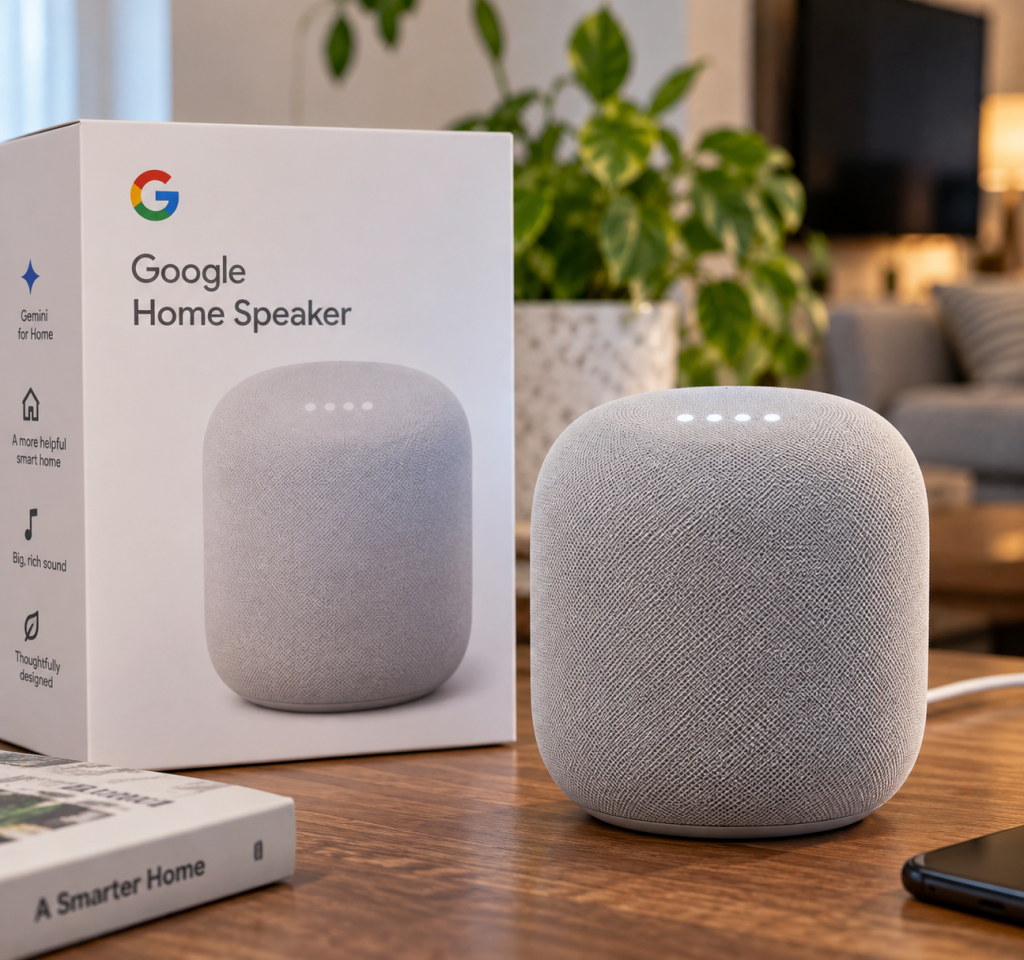
Best for: Google Home households and Gemini users
Assistant: Gemini for Home
Price: $99.99
Matter: Yes
Thread: Yes
The Google Home Speaker is arguably the cleanest recommendation in this entire guide.
Google currently prices it at $99.99, so unlike the Echo Dot Max, you don’t need to wait for a promotion to get below our $100 ceiling.
More importantly, this isn’t simply another version of the aging Nest speakers.
It’s Google’s current-generation smart speaker built around Gemini for Home.
Why We Like It
The Google Home Speaker combines:
- Gemini for Home
- 58mm full-range driver
- omnidirectional sound
- three far-field microphones
- Wi-Fi 6
- Bluetooth 5.4
- Matter
- Thread 1.3 border router
- Matter hub functionality for Google Home
- physical two-stage microphone mute
It’s an unusually complete package for exactly $99.99.
Gemini for Home
Gemini is the biggest reason to choose Google’s speaker instead of an Echo.
Traditional voice assistants often work best when you learn how to phrase commands.
Gemini aims to make interactions more conversational and flexible, including follow-up requests.
For a connected home, that has the potential to make voice control feel less like issuing commands to a machine and more like interacting naturally with an assistant.
Matter and Thread
The Home Speaker also has serious smart-home credentials.
It works as a Matter hub for Google Home and contains a Thread 1.3 border router.
That matters if you’re buying newer Matter-over-Thread products such as sensors, plugs or locks.
Instead of treating the speaker as a standalone gadget, it can become part of the underlying network supporting your connected home.
Sound Quality
Google uses a 58mm full-range driver with omnidirectional sound.
The Dot Max has a more ambitious two-way speaker architecture, which is one reason it narrowly takes our overall award when discounted below $100.
But speaker specifications aren’t the only factor.
If your house already runs on Google Home, the ecosystem advantage of the Google Home Speaker is likely more important than small differences in audio performance.
Privacy
The Home Speaker includes a two-stage hardware microphone mute.
Physical privacy controls are something we specifically look for on always-listening smart-home devices.
Pros
- $99.99 regular price
- Gemini for Home
- Matter hub
- Thread 1.3 border router
- Wi-Fi 6
- Bluetooth 5.4
- Current-generation Google hardware
- Physical microphone mute
- Excellent fit for Google Home
Cons
- Uses essentially the entire $100 budget
- Single full-range driver
- Not compelling for established Alexa households
- Some premium ecosystem/AI functionality may involve additional services
Who Should Buy It?
Buy the Google Home Speaker if you already use Google Home, want Gemini around the house or are starting a new Matter/Thread smart home around Google’s ecosystem.
Bottom line: The best Google smart speaker under $100.
3. Amazon Echo Dot (5th Gen) — Best Value
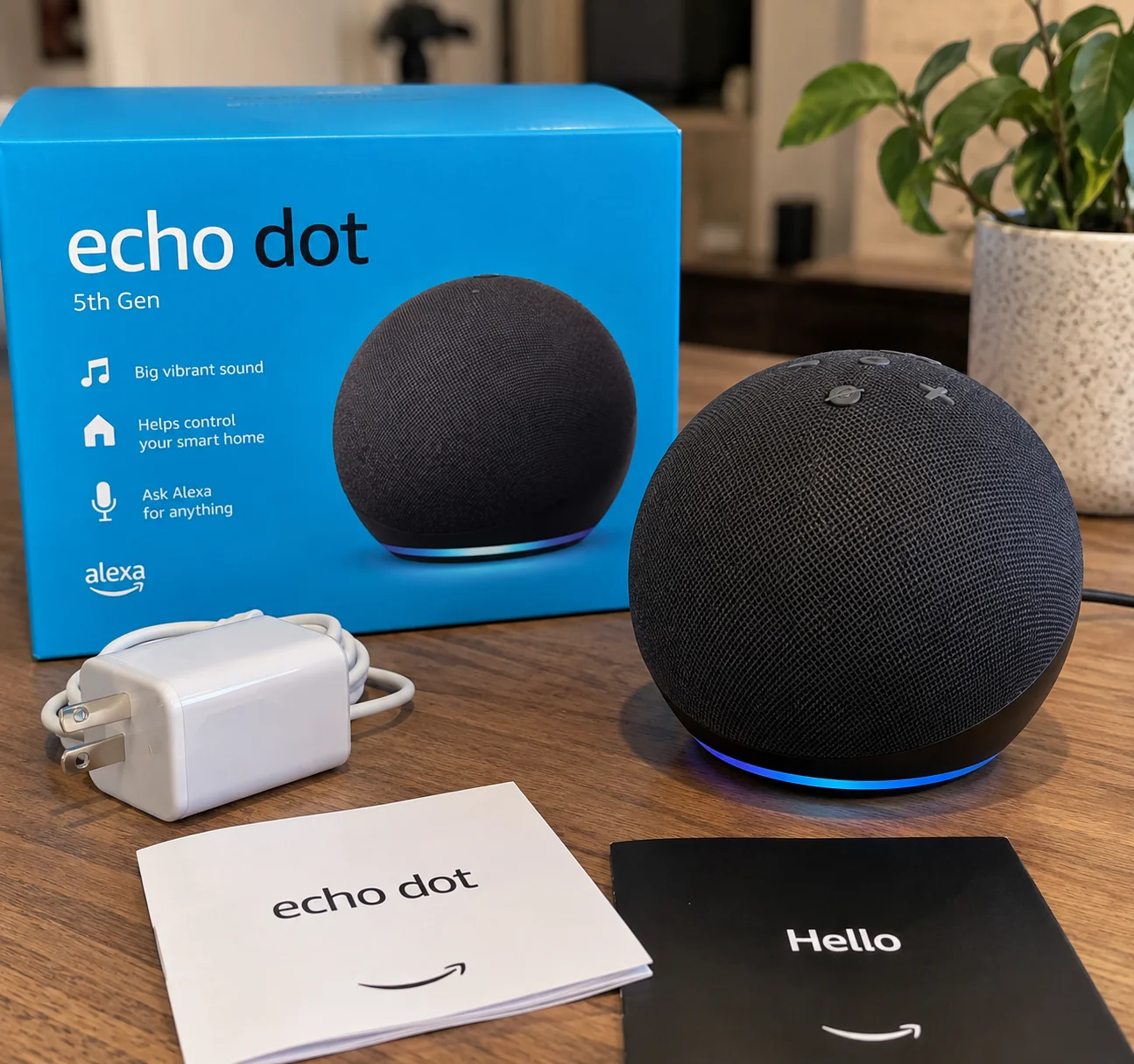
Best for: Affordable Alexa control
Assistant: Alexa
Price: Under $100
The regular Echo Dot (5th Gen) isn’t as exciting as the newer Dot Max.
That’s exactly why it remains such a sensible purchase.
Many people don’t need premium sound or every possible smart-home protocol. They want a small device that responds reliably when they ask Alexa to turn off a light, set a timer or start a routine.
The Echo Dot handles those jobs for less.
Everyday Smart-Home Control
The Echo Dot can work with a broad range of compatible:
- smart bulbs
- smart plugs
- switches
- thermostats
- cameras
- video doorbells
- locks
- televisions
- robot vacuums
Alexa routines can also combine multiple actions.
A simple “Good night” routine, for example, could turn off compatible lights, switch off selected plugs and adjust your thermostat.
That’s the kind of functionality that makes an inexpensive smart speaker genuinely useful.
Built-In Temperature Sensor
The fifth-generation Echo Dot also includes a temperature sensor.
That opens up useful automation possibilities.
You could create a routine that activates a compatible fan when a room gets too warm, for example.
It’s a small feature, but it’s more useful for smart-home owners than many flashy specifications.
Sound Quality
The Echo Dot is perfectly adequate for:
- podcasts
- radio
- background music
- voice responses
- bedrooms
- kitchens
- home offices
But there’s a clear dividing line.
If music quality is important, buy the Dot Max when it’s under $100.
If Alexa and value matter more, buy the regular Dot.
Pros
- Good value
- Alexa
- Broad smart-home compatibility
- Built-in temperature sensor
- Compact design
- Useful for routines
- Physical microphone-off button
- Good secondary-room speaker
Cons
- Weaker audio than Dot Max
- Older hardware
- Less capable smart-home hub functionality
- Not worth switching ecosystems for
Who Should Buy It?
Choose the Echo Dot if you want reliable Alexa smart-home control without spending close to $100.
Bottom line: The best value smart speaker on our list.
4. Amazon Echo Pop — Best Budget Smart Speaker
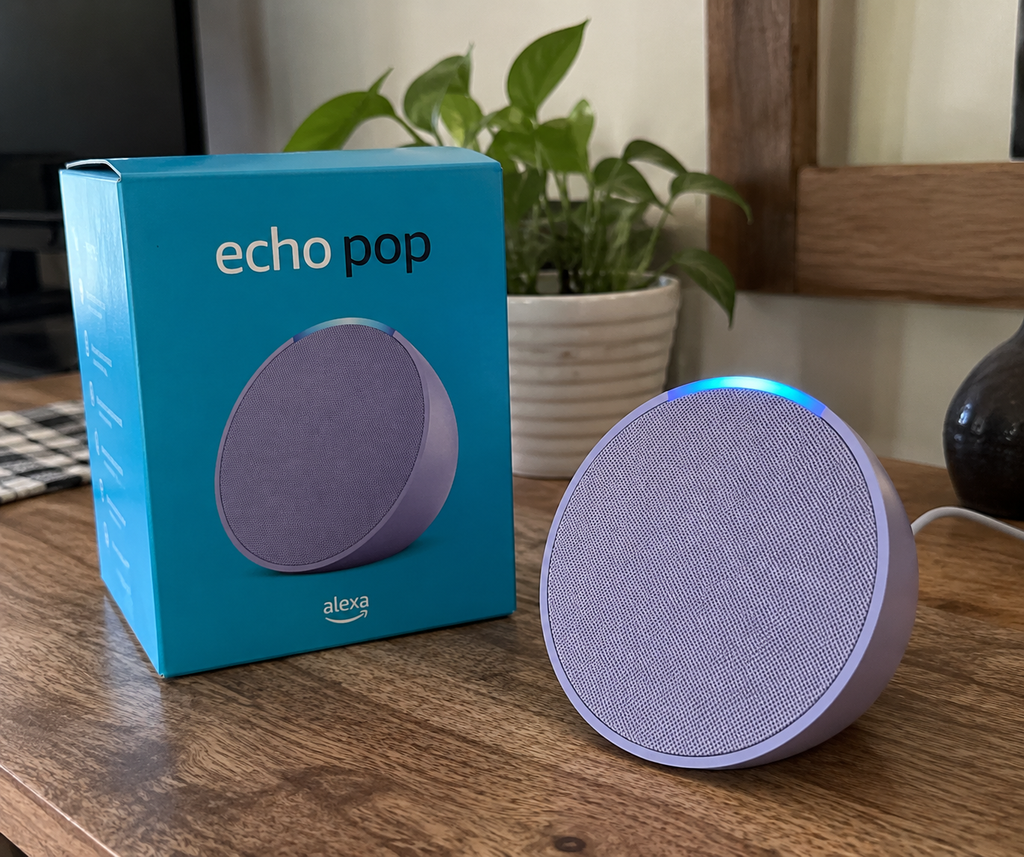
Best for: Small rooms and inexpensive Alexa coverage
Assistant: Alexa
Price: Under $100
Not every room needs a powerful smart speaker.
Sometimes you simply want to say:
“Alexa, turn off the lamp.”
That’s where the Echo Pop makes sense.
It’s a compact and inexpensive way to add Alexa to a bedroom, home office, guest room or other small space.
Echo Pop vs Echo Dot
The regular Echo Dot is the better all-around speaker.
The Pop wins primarily on price and simplicity.
Think of the difference this way:
Main room: Echo Dot Max
Bedroom: Echo Dot
Office: Echo Pop
Guest room: Echo Pop
You don’t need premium audio hardware in every corner of your house just to access voice control.
Sound Quality
Echo Pop is better suited to:
- Alexa responses
- podcasts
- casual music
- radio
- alarms
than serious music listening.
Its design makes more sense in a small room than as the primary speaker for an open living area.
And that’s fine.
A budget recommendation should be judged against its intended purpose, not against a speaker costing twice as much.
When You Should Upgrade to Echo Dot
Always compare the actual prices.
If the Echo Dot costs only slightly more than the Echo Pop, buy the Dot.
The Pop becomes more compelling when there’s a meaningful price gap or when you’re purchasing several devices for secondary rooms.
Pros
- Affordable
- Compact
- Alexa
- Good for secondary rooms
- Easy way to expand an Alexa home
- Simple smart-home control
Cons
- Weaker audio than Echo Dot
- Not ideal for larger rooms
- Echo Dot can be a better value during sales
- Limited reason to choose it if prices are close
Who Should Buy It?
Buy Echo Pop if your priority is putting Alexa into a small or secondary room for as little money as practical.
Bottom line: The best budget smart speaker under $100.
5. Amazon Echo Show 5 (3rd Gen) — Best Smart Display Around $100
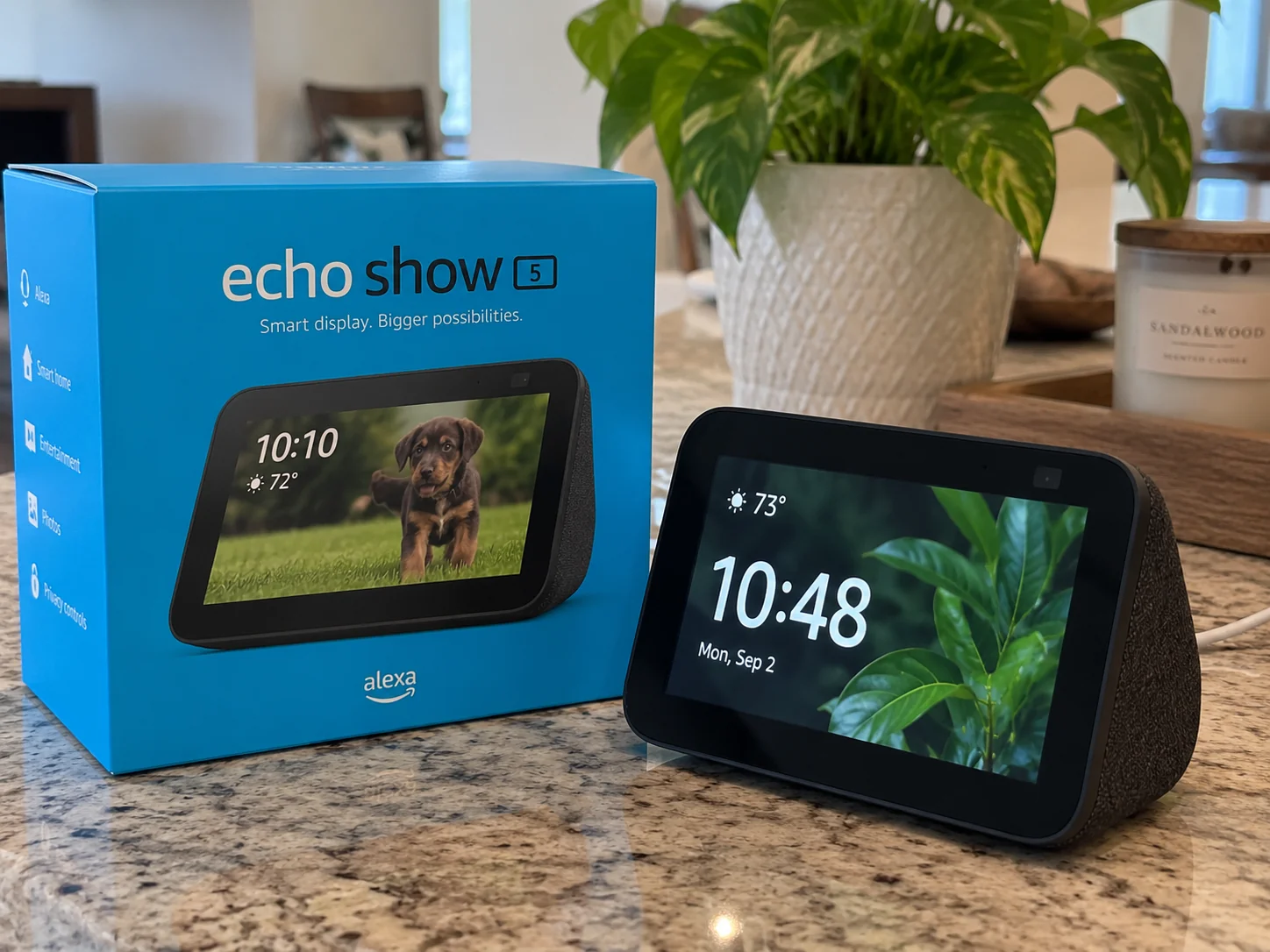
Best for: Alexa users who want a screen
Assistant: Alexa
Display: 5.5 inches
Price position: Around $100
The Echo Show 5 stretches the definition of “smart speaker” because it’s technically a smart display.
We think it belongs here anyway.
People shopping for smart speakers often haven’t yet decided whether they need a screen. Excluding displays entirely would make it harder to answer that question.
The Echo Show 5 gives you Alexa plus visual information in a compact device.
Why Choose a Screen?
For commands like:
“Alexa, turn off the bedroom lights.”
a screen adds very little.
But other tasks are inherently visual.
A smart display can be more useful when you want to:
- see timers
- view compatible security cameras
- see compatible video doorbells
- make video calls
- access touchscreen smart-home controls
- display weather information
- use a visual alarm clock
That makes the Echo Show 5 particularly interesting for bedrooms and kitchens.
Smart-Home Control
You can still use Alexa voice commands just as you would with an Echo speaker.
The difference is that compatible information and controls can also appear visually.
For someone with multiple connected devices, having a compact touchscreen available can occasionally be faster than remembering the exact voice command.
Sound
Don’t buy the Show 5 because you expect it to outperform the Dot Max for music.
That’s not its purpose.
You’re paying for the combination of Alexa + speaker + touchscreen, rather than maximizing audio performance.
Privacy
A smart display deserves additional privacy consideration because it contains a camera.
The Echo Show 5 includes physical privacy controls, including a camera shutter.
That’s particularly important if you’re considering placing one in a bedroom.
Pros
- Alexa plus touchscreen
- Compact 5.5-inch display
- Visual timers
- Compatible camera viewing
- Video calling
- Useful bedside device
- Physical camera privacy control
Cons
- Small display
- Audio isn’t the primary attraction
- More expensive than Echo Dot and Pop
- Camera-equipped devices aren’t ideal for everyone
- Speaker-only buyers don’t need the screen
Who Should Buy It?
Choose the Echo Show 5 if you want Alexa but regularly find yourself wishing your smart speaker could show you information instead of only speaking it.
Bottom line: The best compact smart display around our $100 budget.
Why Are Four of Our Five Picks Amazon Products?
We noticed it too.
This isn’t intended to be an Amazon Echo roundup.
The problem is that the current smart-speaker market under $100 isn’t evenly distributed between brands.
Amazon offers a considerably broader range of speakers and displays across different price points, while Google and Apple currently have much narrower speaker lineups.
We could make this list appear more balanced by adding older Google products or a current Apple speaker that exceeds the budget.
We don’t think that would make the recommendations better.
Instead, our rule is simple:
A product earns a position because it fits the budget and serves a distinct type of buyer — not because we need another brand logo in the table.
That’s why the Google Home Speaker ranks prominently at #2, while products such as the HomePod mini are discussed below rather than artificially inserted into the Top 5.
Other Smart Speakers We Considered
Several popular smart speakers didn’t make our final five.
Understanding why can be just as useful as seeing what won.
Apple HomePod mini
The HomePod mini is the obvious alternative for an Apple Home household.
It offers Siri, smart-home hub functionality, Thread connectivity, temperature and humidity sensing, multi-room audio and deep integration with Apple’s ecosystem.
The problem is price.
At its current U.S. price, it exceeds the $100 ceiling of this article.
For that reason, we’re not going to call it one of the “best smart speakers under $100.”
If you’re committed to Apple and willing to exceed the budget, however, it’s the model we’d investigate first.
Google Nest Mini
The Nest Mini was an inexpensive way to add Google’s assistant around the house and may still appear through remaining retailer inventory.
But it is previous-generation hardware.
With Google’s new Home Speaker now representing its current smart-speaker direction, we’d rather recommend current hardware to someone building a new smart home in 2026.
A heavily discounted Nest Mini can still make sense as a cheap secondary speaker for an existing Google household.
Google Nest Audio
Nest Audio was Google’s more music-oriented smart speaker.
Like the Nest Mini, however, it belongs to Google’s previous speaker generation.
We wouldn’t add it to a current Top 5 simply to make the brand distribution look more balanced.
Amazon Echo Spot
The Echo Spot makes sense as a bedside Alexa device thanks to its clock-oriented display.
But once its regular price moves beyond our $100 ceiling, it no longer belongs in a strict under-$100 ranking.
If you find it substantially discounted, it’s worth comparing with the Echo Show 5.
Amazon Echo Studio
The Echo Studio is a much more ambitious audio product.
It’s also well beyond our $100 budget.
If music quality is your overriding priority and you’re willing to spend substantially more, it’s worth considering separately.
Smart Speaker vs Smart Display: Which Should You Buy?
This decision may matter more than choosing between two similar speaker models.
Choose a Smart Speaker If:
- Voice control is your priority
- You mainly listen to music or podcasts
- You want something compact
- You don’t need visual information
- You prefer fewer screens around the house
- You don’t want an indoor camera
The Echo Dot Max, Google Home Speaker, Echo Dot and Echo Pop are the relevant choices from our rankings.
Choose a Smart Display If:
- You want visual timers
- You want video calling
- You want to view compatible cameras
- You like touchscreen controls
- You want glanceable information
- You want a bedside display
That’s where the Echo Show 5 becomes more useful.
Echo Dot Max vs Google Home Speaker
These are the two most interesting products in this guide.
| Feature | Echo Dot Max | Google Home Speaker |
|---|---|---|
| Best for | Alexa households | Google households |
| Assistant | Alexa / Alexa+ | Gemini for Home |
| Matter | Yes | Yes |
| Thread | Yes | Yes |
| Zigbee | Yes | No |
| Audio design | Two-way woofer + tweeter | 58mm full-range driver |
| Current-generation AI | Alexa+ | Gemini |
| Regular price | Above $100 | $99.99 |
| Needs sale to qualify | Yes | No |
| Our verdict | Best overall at ≤$100 | Best Google option |
Which Should You Buy?
If the Echo Dot Max costs $100 or less, we prefer it as the overall package.
Its combination of stronger audio hardware and Matter, Thread and Zigbee connectivity gives it an unusually broad feature set.
But if the Dot Max is back at its regular price above $100, the equation changes.
The Google Home Speaker becomes the cleaner under-$100 purchase at $99.99.
Existing ecosystem matters even more.
If you already have a house full of Google Home devices, switching to Alexa because one Echo has slightly better specifications probably isn’t worthwhile.
The reverse is equally true.
Echo Dot Max vs Echo Dot
This comparison is simpler.
Buy Echo Dot Max if:
- Music quality matters
- It’s discounted to $100 or less
- This will be your primary speaker
- You want Matter, Thread and Zigbee hub functionality
- You want Amazon’s newer speaker hardware
Buy Echo Dot if:
- You mainly want Alexa
- You want to spend less
- You’re buying speakers for several rooms
- It’s going into a bedroom or office
- Premium audio isn’t important
For a living room, we’d lean toward Dot Max.
For several rooms on a budget, we’d rather buy multiple Echo Dots than spend heavily on premium speakers everywhere.
Echo Dot vs Echo Pop
The Echo Dot is the better overall device.
The Echo Pop is the cheaper specialist.
Choose Echo Pop if:
- It’s significantly cheaper
- You’re putting it in a small room
- Voice control matters more than music
- You’re expanding an existing Alexa system
Choose Echo Dot if:
- It’s your main Alexa speaker
- You listen to music regularly
- The price difference is small
- You want the temperature sensor
Don’t choose Pop automatically because it has a lower MSRP.
During sales, the price difference can become small enough that the Dot represents better value.
Alexa vs Gemini for Home: Which Ecosystem Is Better?
There isn’t a universal winner.
Your existing devices and future smart-home plans matter more.
Choose Alexa If:
- You already own Echo devices
- You use Ring or Blink products
- You want a large range of speaker choices
- You value broad smart-device compatibility
- You want Zigbee support from a device such as Dot Max
Choose Gemini for Home If:
- You already use Google Home
- You prefer Google’s ecosystem
- Gemini’s conversational capabilities appeal to you
- You’re building around Matter and Thread
- You use other Google devices and services extensively
The wrong approach is buying a speaker first and thinking about the ecosystem afterward.
Choose your ecosystem, then choose the speaker that makes sense inside it.
Matter and Thread: Do They Matter in a Smart Speaker?
If you’re building a new smart home in 2026, yes.
Matter
Matter is a smart-home interoperability standard intended to make compatible products work across major ecosystems more easily.
That can reduce the importance of choosing products exclusively based on a “Works with Alexa” or “Works with Google Home” badge.
It doesn’t make every ecosystem identical, but it gives buyers more flexibility.
Thread
Thread is a low-power mesh networking technology increasingly used by Matter devices.
A Thread border router connects compatible Thread devices to the rest of your home network.
That’s why the Thread capability in products such as the Echo Dot Max and Google Home Speaker is more meaningful than it might initially appear.
If you’re starting from scratch, our What Is Matter Protocol? Smart Home Explained guide goes deeper into how these technologies work together.
Do Smart Speakers Require a Subscription?
Not for basic functionality.
You can generally use core features such as:
- voice commands
- compatible smart-home control
- timers
- alarms
- basic routines
- announcements
- general assistant functions
without buying a separate smart-speaker subscription.
But that doesn’t mean everything is free.
Music streaming services may require subscriptions, and certain premium AI or smart-home services may involve additional fees.
When comparing smart-home products, always consider potential ongoing costs rather than focusing solely on the purchase price.
Which Smart Speaker Is Best for Each Room?
| Room | Our Pick | Why |
|---|---|---|
| Living Room | Echo Dot Max | Better audio + powerful smart-home hub |
| Google Living Room | Google Home Speaker | Gemini + Matter + Thread |
| Kitchen | Echo Dot | Good balance of sound and price |
| Bedroom | Echo Dot | Compact and capable |
| Home Office | Echo Pop | Cheap voice control |
| Guest Room | Echo Pop | No need to overspend |
| Bedroom with Screen | Echo Show 5 | Clock + Alexa + visual information |
| Kitchen with Screen | Echo Show 5 | Timers and visual controls |
What Is the Best Alexa Speaker Under $100?
The Echo Dot Max, provided its actual selling price is $100 or less.
If it isn’t:
Echo Dot is our value recommendation.
What Is the Best Google Smart Speaker Under $100?
The Google Home Speaker.
Its $99.99 price, Gemini for Home, Matter hub functionality and Thread border router make it an easy recommendation for Google households.
What Is the Best Smart Speaker for Matter?
For Alexa:
Echo Dot Max.
For Google Home:
Google Home Speaker.
Both are strong choices for a new Matter-based smart home.
Choose between them based primarily on the ecosystem you prefer.
What Is the Best Smart Speaker for Music Under $100?
Our choice is the Echo Dot Max when discounted below $100.
Its dedicated woofer and tweeter give it a stronger audio foundation than the cheaper Echo models.
But there’s an important distinction.
If your only priority is music and you don’t care about voice assistants or smart-home control, you should also consider dedicated wireless speakers rather than limiting yourself to smart speakers.
What Is the Best Smart Speaker for Beginners?
For someone starting an Alexa home:
Echo Dot.
It gives you the core Alexa experience without requiring a large investment.
For someone starting a Google Home:
Google Home Speaker.
It costs more, but it’s Google’s current-generation speaker and gives you Gemini, Matter and Thread in one device.
If you haven’t chosen an ecosystem yet, compare Alexa and Google Home before buying anything.
Common Mistakes When Buying a Smart Speaker
Choosing the Speaker Before Choosing an Ecosystem
A $20 discount isn’t worth much if the speaker doesn’t fit the rest of your connected home.
Start with Alexa versus Google Home, then compare hardware.
Assuming More Expensive Means Smarter
Extra money often buys better audio.
It doesn’t necessarily make turning off your smart lights dramatically faster.
If voice control is your main priority, Echo Dot may be enough.
Ignoring Matter and Thread
You don’t need to become a networking expert.
But understanding whether your speaker can support the smart-home products you intend to buy can prevent compatibility headaches later.
Buying Old Hardware Just Because It’s Cheap
Clearance products can offer excellent value.
But saving a few dollars isn’t always worthwhile if you’re buying into previous-generation hardware when a newer platform has replaced it.
Buying a Smart Display When You Don’t Need a Screen
Ask yourself what you’ll actually look at.
If you can’t think of a useful answer, buy a speaker.
Ignoring Privacy Controls
Look for physical microphone controls.
If the product has a camera, check for a physical camera shutter as well.
Should You Buy One Smart Speaker or Several?
Start with one.
Put it in the room where you spend the most time.
Use it for a few weeks and see whether voice control actually becomes part of your routine.
If it does, expand gradually.
For example, an Alexa household could eventually use:
Living room: Echo Dot Max
Kitchen: Echo Dot
Bedroom: Echo Dot
Office: Echo Pop
You don’t need the most expensive speaker in every room.
Spend more where audio quality matters and less where you primarily need voice access.
Final Verdict: Which Smart Speaker Under $100 Should You Buy?
For most Alexa households, the Amazon Echo Dot Max is our best overall smart speaker around $100 in 2026 — provided you can actually buy it for $100 or less.
It combines strong audio with Alexa, Matter, Thread, Zigbee and smart-home hub functionality, making it more than just a voice-controlled speaker.
But don’t blindly buy our #1 pick.
If the Dot Max is above $100, it no longer meets the premise of this guide.
The Google Home Speaker is the better choice for Google Home users and one of the cleanest sub-$100 recommendations at $99.99.
The Echo Dot is our value winner for buyers who want Alexa without paying for premium audio.
The Echo Pop is the inexpensive choice for secondary rooms.
And the Echo Show 5 makes sense when a screen would genuinely improve how you interact with your smart home.
Frequently Asked Questions
Is the Echo Dot Max actually under $100?
Not at its current regular price. Its price was recently increased above $100, although it has also been discounted below $100. Check the current selling price before purchasing.
Is Google Home Speaker better than Echo Dot Max?
It depends on your ecosystem. Echo Dot Max offers particularly strong smart-home connectivity and audio hardware, while Google Home Speaker is the better fit for Gemini and Google Home users. Google also has the advantage of a $99.99 regular price.
Is Google Home Speaker under $100?
Yes. Google currently lists the Google Home Speaker at $99.99 in the U.S.
Why are most of the products Amazon Echo speakers?
Amazon currently offers a broader selection of smart speakers at different price points than Google or Apple. We prefer recommending five products that genuinely make sense rather than adding outdated or over-budget models simply to create artificial brand diversity.
Do smart speakers work without a subscription?
Basic voice-assistant and smart-home functionality generally doesn’t require a dedicated monthly subscription. Music services, premium AI features and certain other services may cost extra.
Can smart speakers control Matter devices?
Compatible smart speakers can serve as Matter controllers or hubs. Some models, including the Google Home Speaker and Echo Dot Max, also provide Thread connectivity for compatible Matter-over-Thread products.
Which smart speaker is best for Alexa?
The Echo Dot Max is our strongest Alexa choice when it costs $100 or less. For value, choose the Echo Dot.
Which smart speaker is best for music?
Around our $100 budget, we prefer the Echo Dot Max when discounted below $100. If music is your only priority, however, consider a dedicated wireless speaker as well.
Is a smart display better than a smart speaker?
Only if you’ll use the screen. A smart display is better for camera feeds, visual timers, video calls and touchscreen controls. If you primarily want music and voice commands, a speaker is usually simpler and less expensive.
Our Verdict
The Amazon Echo Dot Max is our best overall smart speaker under $100 when it’s available at that price, thanks to its stronger sound and smart-home capabilities.
For Google users, the Google Home Speaker is the best choice, while the Echo Dot (5th Gen) offers the best value. Choose the Echo Pop for a cheaper secondary-room speaker or the Echo Show 5 if you want a screen.
Pricing, availability and specifications checked September 2026. Retail prices and promotional discounts can change.

Ryan Hayes
Founder & EditorRyan Hayes is the founder and editor of Smart Space Advisor, where he researches and evaluates smart home technology to help readers make informed buying decisions. His work focuses on smart security, video doorbells, smart plugs, lighting, and connected-home platforms including Matter, Alexa, Google Home, and Apple Home. By combining product research, manufacturer documentation, feature comparisons, and real-world considerations, Ryan aims to cut through technical jargon and provide practical, straightforward advice about which smart home products offer genuine value.