
Affiliate Disclosure: SmartSpaceAdvisor.com is a participant in the Amazon Services LLC Associates Program. We may earn a commission when you buy through our links at no extra cost to you. Our recommendations are always based on honest research — never paid placements.
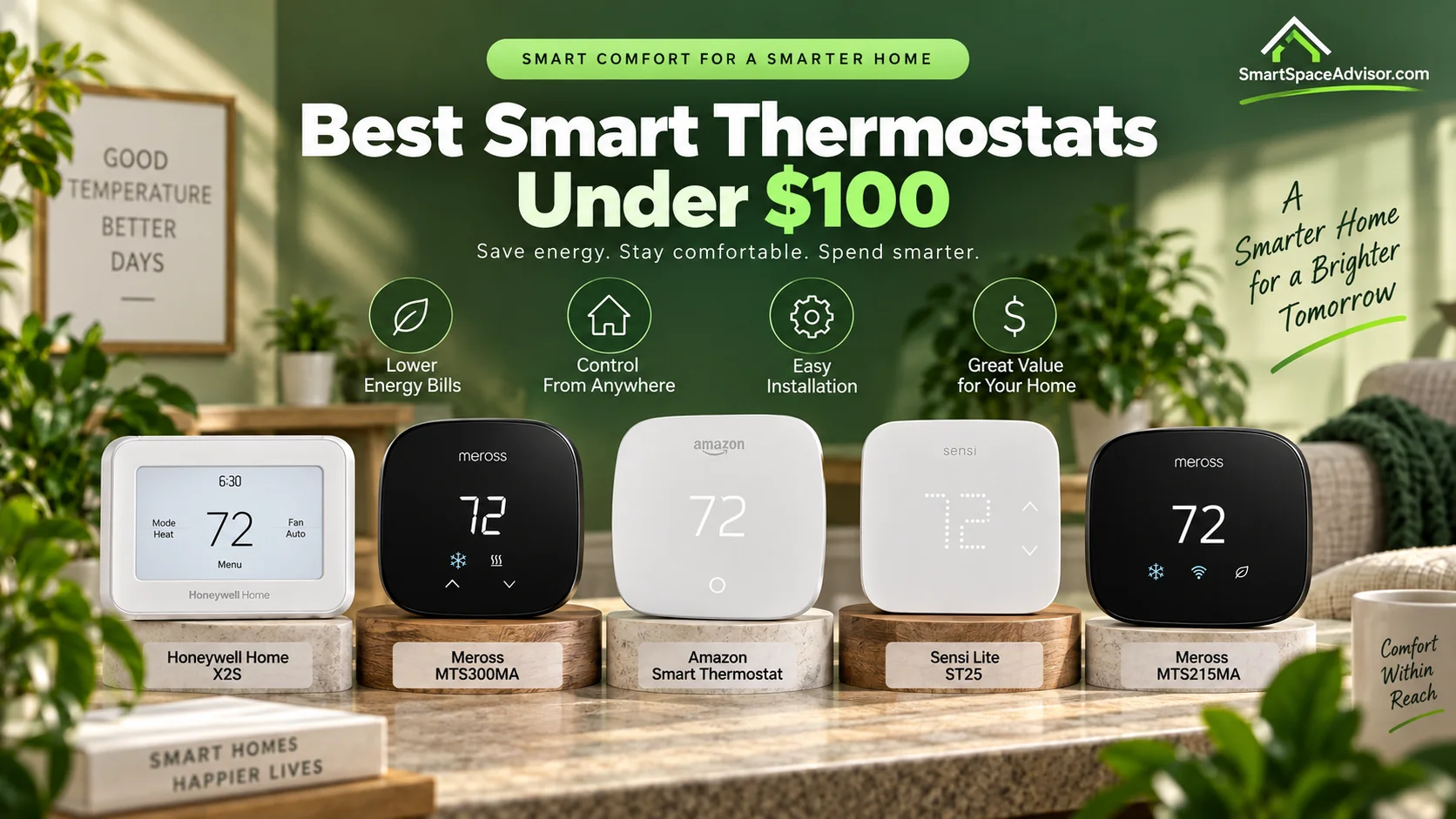
A good smart thermostat doesn’t have to cost $200. Several models under $100 now offer remote temperature control, scheduling, voice-assistant support, energy-saving features and even Matter compatibility.
But there’s a catch: buying a smart thermostat isn’t like buying a smart speaker. Compatibility comes first. Your HVAC system, voltage, C-wire and heat-pump configuration can determine whether a thermostat will work in your home at all.
After comparing current sub-$100 models, the Honeywell Home X2S is our best overall pick. At a $79.99 MSRP, it combines Matter support, ENERGY STAR certification and compatibility with major smart-home platforms at a very competitive price.
The Meross MTS300MA is our favorite for a Matter-focused smart home, while the Amazon Smart Thermostat offers excellent value for Alexa users.
Best Smart Thermostats Under $100 at a Glance
| Thermostat | Our Pick | Price* | Matter | C-Wire | Best For |
|---|---|---|---|---|---|
| Honeywell Home X2S | 🏆 Best Overall | $66.99 MSRP | Yes | Depends on system | Most households |
| Meross MTS300MA | Best for Matter | $99.99 | Yes | Required | Multi-platform smart homes |
| Amazon Smart Thermostat | Best for Alexa | $79.99 | No | Required† | Alexa households |
| Sensi Lite ST25 | Best for Many Homes Without a C-Wire | $89.99 MSRP | No | Depends on system | Older conventional HVAC |
| Meross MTS215MA | Best for Electric Heating | $89.99 | Yes | N/A for 24V HVAC | 120–240V electric heating |
*Regular price or MSRP at the time of research. Prices can change.
A compatible C-wire adapter may be an option in some installations.
Our Quick Recommendation
Buy the Honeywell Home X2S if you want the best all-around combination of price, smart-home compatibility and features.
Buy the Meross MTS300MA if Matter and multi-platform compatibility are your priorities.
Buy the Amazon Smart Thermostat if you already use Alexa and want to spend as little as possible without giving up core smart features.
Buy the Sensi Lite ST25 if you have a compatible conventional HVAC system without a C-wire.
Buy the Meross MTS215MA only if you have compatible 120–240V electric baseboard or similar line-voltage heating.
Important: Always run your wiring and HVAC configuration through the manufacturer’s compatibility checker before buying. A thermostat’s smart features don’t matter if it can’t control your heating and cooling system.
Our Top Picks
Here are our top picks:
1. Honeywell Home X2S Smart Thermostat — Best Overall
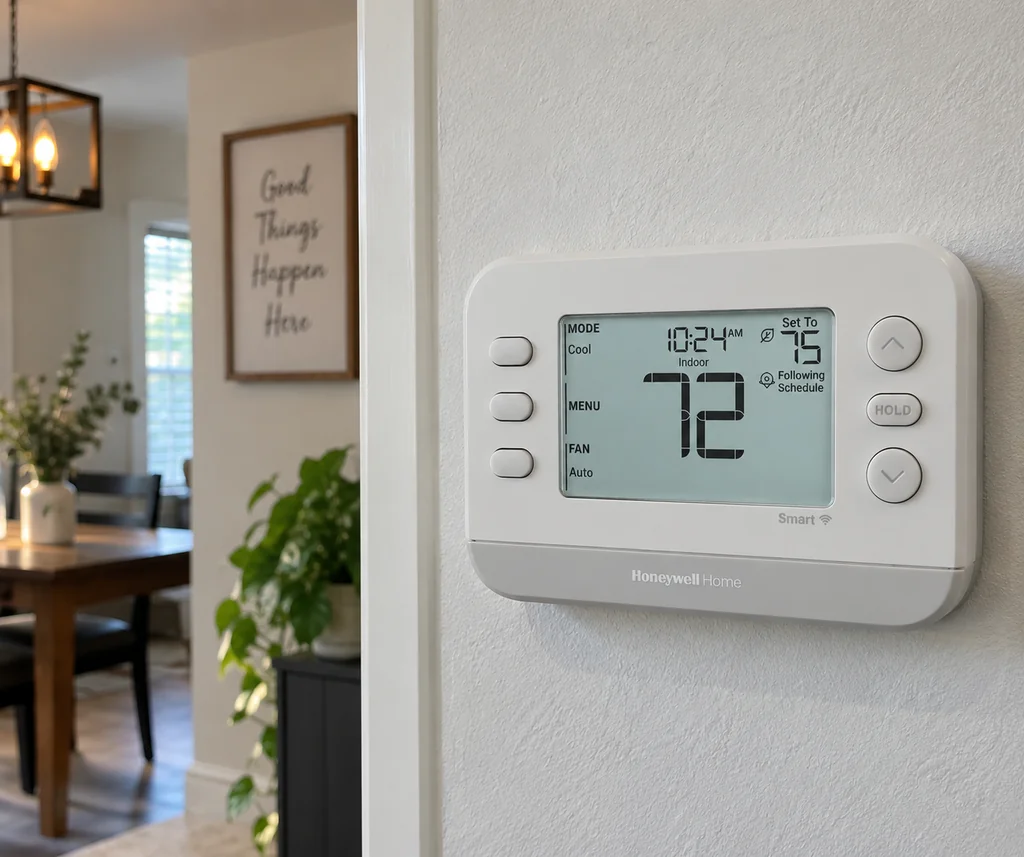
Price: $66.99 MSRP
Best for: Buyers who want an affordable, well-rounded smart thermostat
The Honeywell Home X2S takes our top spot because it delivers an impressive mix of smart features, broad compatibility and value for its $79.99 MSRP.
Matter support gives the X2S plenty of flexibility for a modern smart home, with integration across Amazon Alexa, Google Home and Apple Home. This makes it a particularly appealing choice if you use devices from different ecosystems or want the freedom to switch platforms later.
It is also ENERGY STAR certified and includes practical features such as indoor humidity monitoring and air-filter replacement reminders. Support for both 2.4GHz and 5GHz Wi-Fi is another useful advantage, especially at this price.
Resideo says the X2S is designed to work with most HVAC systems, making it a strong option for a wide range of homes. Compatibility can still vary by system and wiring, though, so it’s worth checking your HVAC setup before buying.
- Excellent $79.99 MSRP
- Matter support
- Alexa, Google Home and Apple Home compatibility
- ENERGY STAR certified
- Humidity monitoring
- Filter-change reminders
- 2.4GHz and 5GHz Wi-Fi
- Designed for broad HVAC compatibility
- Compatibility still varies by HVAC configuration
- Doesn’t offer the premium display or remote sensors found on more expensive thermostats
Why It’s Our #1 Pick
The X2S doesn’t win because it has one spectacular feature. It wins because there are relatively few obvious compromises for $79.99.
You get Matter, broad smart-home support, ENERGY STAR certification and useful HVAC-related features while staying well below our $100 limit.
Best for: Someone who wants a modern smart thermostat under $100 without committing to a single smart-home ecosystem.
2. Meross MTS300MA — Best for Matter
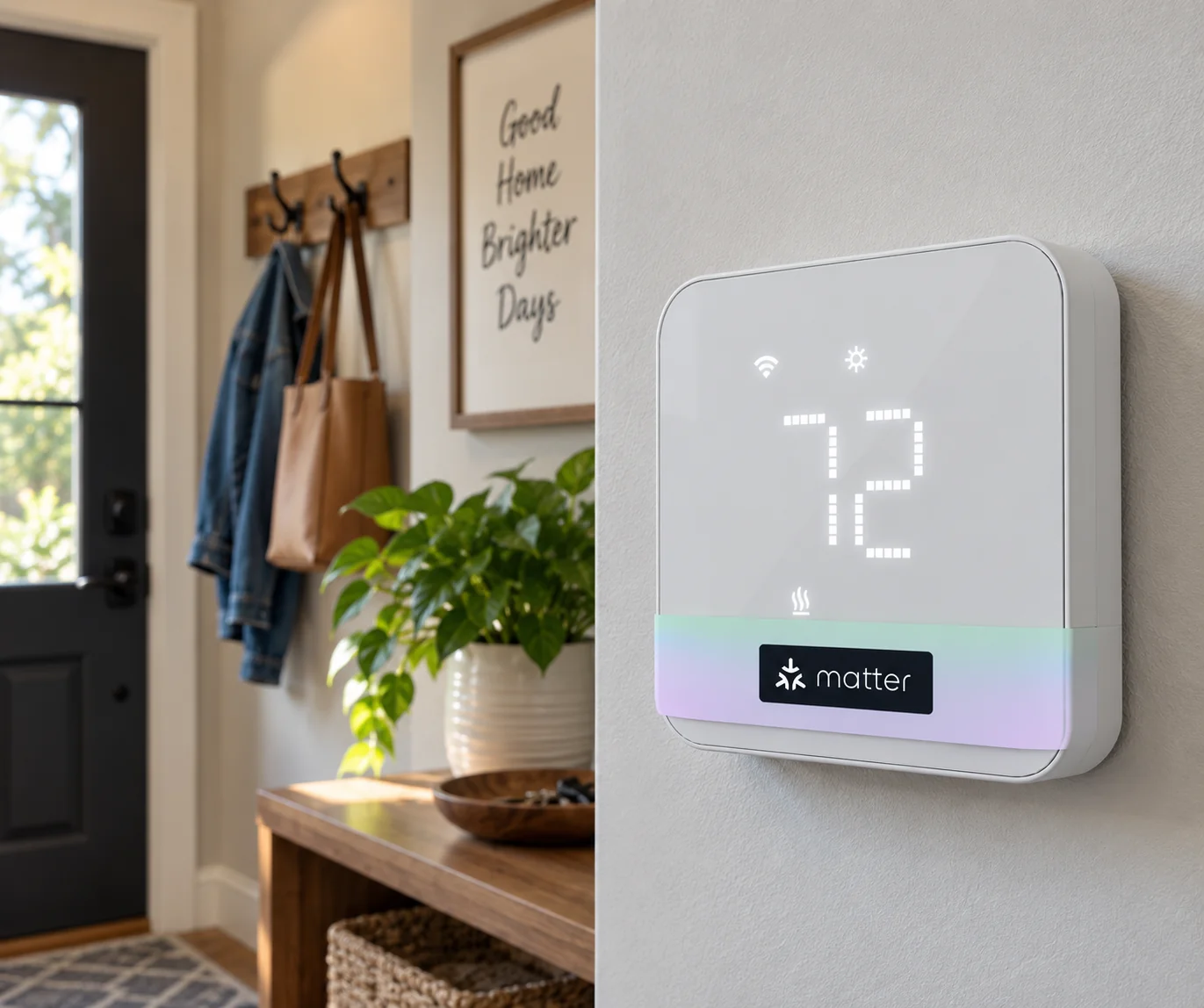
Price: $99.99 regular price
Best for: Matter users and mixed smart-home ecosystems
The Meross MTS300MA is a strong choice for buyers who want Matter support without moving into premium thermostat pricing. It works across Apple Home, Amazon Alexa, Google Home and Samsung SmartThings, making it particularly useful in homes that aren’t built around a single ecosystem.
For a deeper explanation of the standard and its benefits, see our guide to what Matter is and how it works.
The MTS300MA is designed for conventional 24V HVAC systems, and Meross states that it’s compatible with around 95% of heating and cooling systems, including many furnaces, boilers, air conditioners and heat-pump configurations. A C-wire is required for power, although Meross offers a separate adapter for systems that don’t already have one.
Beyond smart-home integration, you get remote temperature control, 7×24-hour scheduling and heating and cooling usage data through the Meross app. Overall, it’s a well-rounded option for buyers who value cross-platform flexibility and want more control over their HVAC schedule and usage.
- Matter support
- Apple Home, Alexa, Google Home and SmartThings compatibility
- 7×24-hour scheduling
- Remote app control
- Heating and cooling usage tracking
- Broad claimed HVAC compatibility
- Costs the full $99.99
- Requires a C-wire
- 2.4GHz Wi-Fi only
- No remote room sensor included
Where the Meross Beats Our Winner
The MTS300MA is particularly appealing if your priority is building around Matter and you already use several smart-home platforms.
Its main disadvantage is price: at $99.99, it sits right at the ceiling for this guide, while the Honeywell X2S has a lower MSRP.
Best for: A Matter-focused smart home where ecosystem flexibility matters more than getting the absolute lowest price.
3. Amazon Smart Thermostat — Best for Alexa
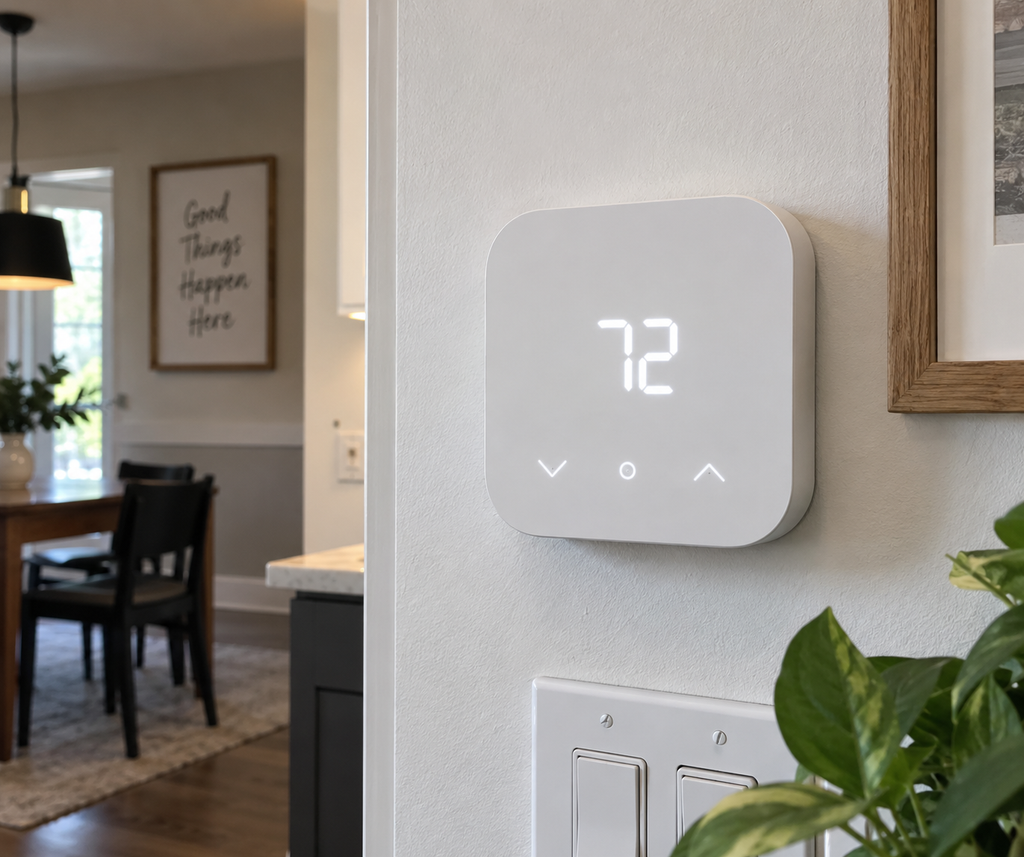
Price: $79.99
Best for: Alexa households
The Amazon Smart Thermostat is easy to recommend if Alexa already runs your smart home.
At $79.99, it covers the features most people actually need: remote temperature control, schedules and smart automation through the Alexa app. It’s also ENERGY STAR certified.
If you have an Echo or another compatible Alexa-enabled device, you can adjust the temperature with voice commands. The thermostat itself doesn’t have a built-in Alexa microphone or speaker.
Amazon’s biggest advantage is value. You’re getting a mainstream smart thermostat at one of the lowest regular prices in this roundup.
Its biggest weakness is equally clear: it’s heavily centered around Alexa.
If you’re building around Apple Home, Google Home or Matter, one of our first two picks makes more sense.
Read our review of Amazon Smart Thermostat
- Excellent Alexa integration
- ENERGY STAR certified
- Remote app control
- Scheduling and Alexa routines
- Ring integration
- No Matter support
- Limited appeal outside Alexa
- Requires C/common power
- Not compatible with every heat-pump configuration
- No remote room sensor included
Check Your HVAC System Carefully
The Amazon Smart Thermostat requires a C/common power connection, although a compatible adapter may work if your existing wiring doesn’t provide one.
Amazon says the thermostat works with air-to-air and geothermal heat pumps, but not dual-fuel heat-pump systems that use a gas or oil furnace for backup heat. Check Amazon’s HVAC compatibility guidance before buying.
It’s also not designed for high-voltage 110V or 220V heating systems.
Best for: An Alexa household that wants the core benefits of a smart thermostat without paying premium prices.
“If you’re building around Alexa, our guide to the best smart speakers under $100 includes affordable Echo options that can also provide voice control for your thermostat.”
4. Sensi Lite ST25 — Best for Many Homes Without a C-Wire
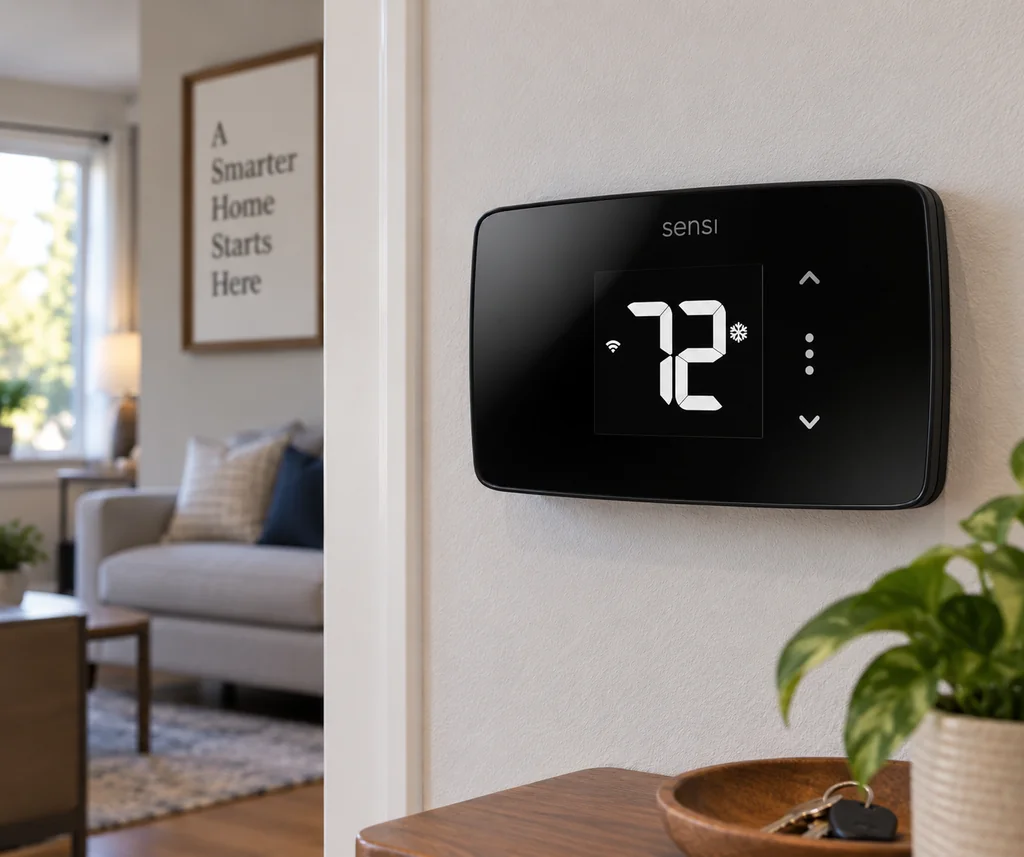
Price: $89.99 MSRP
Best for: Older conventional HVAC systems where a C-wire isn’t available
The Sensi Lite ST25 is a practical choice for homes without a C-wire. Sensi says it can run without one in most conventional heating-and-cooling systems, which can make upgrading an older thermostat easier.
There are exceptions. A C-wire is required for heat-only, cool-only, heat-pump and zone systems, so checking your wiring and HVAC compatibility before buying is important.
Beyond that, the Sensi Lite keeps things simple. It supports Alexa, Google Home and SmartThings, with app control, scheduling, geofencing and smart alerts.
It lacks Matter support and has a fairly basic design, but for many conventional HVAC systems, its flexible wiring requirements are the bigger advantage.
- No C-wire needed for many conventional systems
- Alexa, Google Home and SmartThings support
- Geofencing
- Programmable schedules
- Smart alerts
- C-wire still required for several HVAC configurations
- No Matter
- No Apple Home support listed for this model
- Basic display
- No remote room-sensor support
Best for: A compatible conventional heating-and-cooling system where installing a C-wire would otherwise complicate the upgrade.
5. Meross MTS215MA — Best for Electric Baseboard Heating
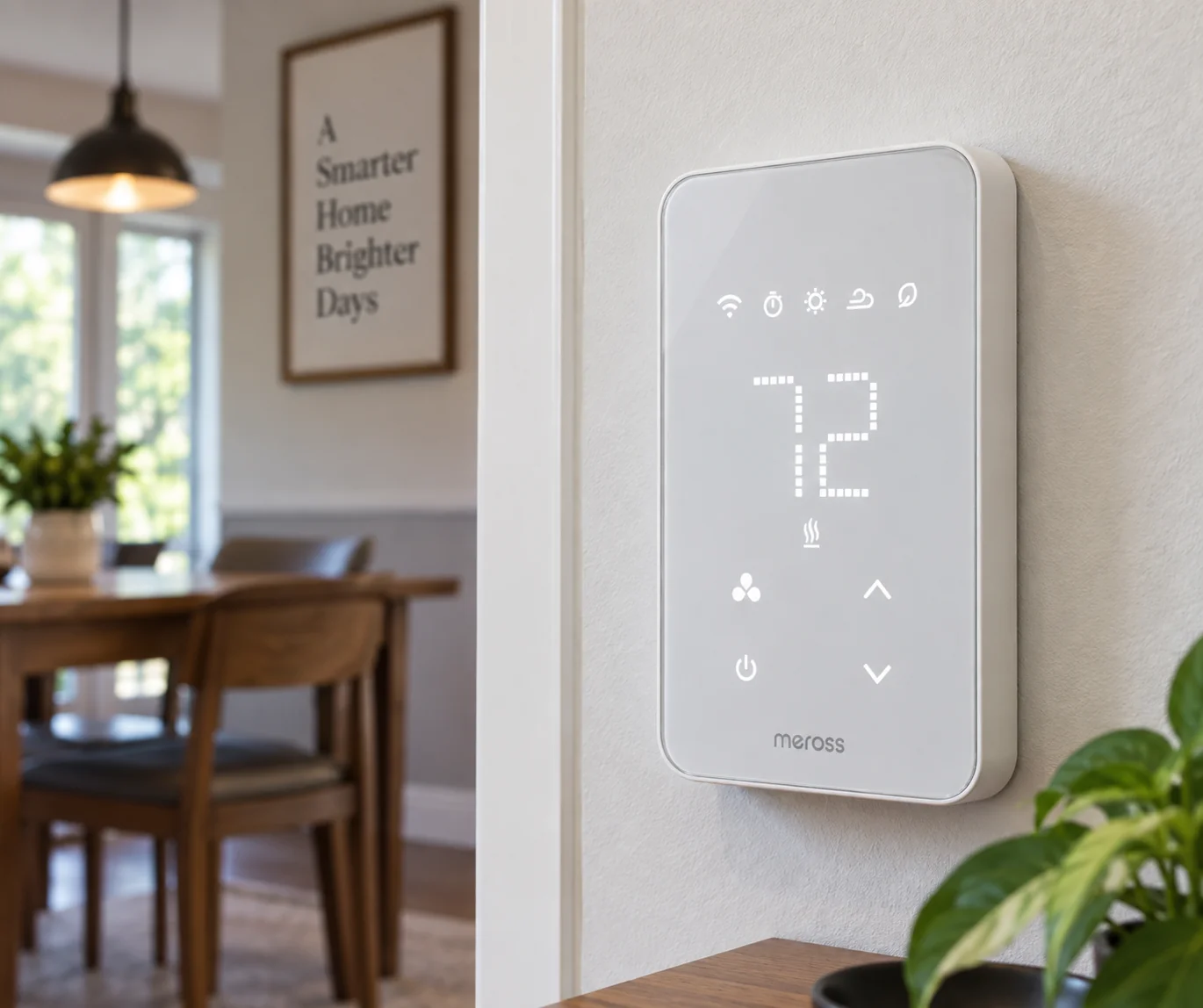
Price: $89.99 regular price
Best for: Compatible 120–240V electric heating systems
The Meross MTS215MA isn’t a direct alternative to the other four thermostats—and that’s precisely why it’s included.
Most thermostats above are designed for low-voltage HVAC systems. The MTS215MA is designed for compatible 120–240V line-voltage electric heating, including electric baseboard heaters, convectors and fan-forced heaters.
It is not compatible with conventional 24V HVAC systems.
For the right home, however, it brings many of the smart features you’d expect from a modern thermostat to a category that requires different electrical hardware.
It supports Matter and major smart-home ecosystems, while the Meross app adds scheduling, energy monitoring and open-window detection.
- Designed for 120–240V electric heating
- Matter support
- Apple Home, Alexa, Google Home and SmartThings compatibility
- Energy monitoring
- 7×24-hour scheduling
- Open-window detection
- Not compatible with conventional 24V HVAC
- Not suitable for standard central air conditioning
- Specialized use case
- Line-voltage installation requires appropriate electrical knowledge
Best for: Homes with compatible electric baseboard, convector or fan-forced heating that need a line-voltage smart thermostat.
How to Choose the Right Smart Thermostat Under $100
Price is important, but compatibility should determine your shortlist before features do.
Here’s what to check.
Check Your HVAC Voltage First
This is the easiest way to avoid buying completely the wrong thermostat.
Most central furnaces, air conditioners and heat pumps use low-voltage thermostat wiring, commonly around 24V.
Some electric baseboard and similar heating systems use 120V or 240V line voltage instead.
The two categories aren’t interchangeable.
For this guide:
| Thermostat | System Type |
|---|---|
| Honeywell Home X2S | Conventional compatible HVAC |
| Meross MTS300MA | 24V HVAC |
| Amazon Smart Thermostat | Compatible low-voltage HVAC |
| Sensi Lite ST25 | Compatible low-voltage HVAC |
| Meross MTS215MA | 120–240V electric heating |
If you aren’t sure which system you have, check the existing thermostat and HVAC documentation before ordering.
Check Whether You Have a C-Wire
A C-wire, or common wire, provides continuous power to many smart thermostats.
The Meross MTS300MA requires one.
The Amazon Smart Thermostat also requires C/common power, although an adapter may be an option in some homes.
The Sensi Lite is more flexible. It can work without a C-wire on most conventional heating-and-cooling systems, but a C-wire is still required for heat pumps, heat-only, cool-only and zone systems.
Don’t identify your wiring based only on wire color. Use the manufacturer’s compatibility checker.
Pay Extra Attention to Heat Pumps
If you have a heat pump, don’t stop when a product page says “heat-pump compatible.”
Heat pumps can have different numbers of heating and cooling stages, auxiliary heat and different backup-heating arrangements.
The Amazon Smart Thermostat, for example, supports certain air-to-air and geothermal heat pumps but doesn’t support dual-fuel systems that pair a heat pump with gas or oil furnace backup.
Always check your exact heat-pump configuration.
Choose Your Smart-Home Ecosystem
Your existing smart-home platform can make the decision much easier.
Apple Home: Honeywell X2S or Meross MTS300MA
Alexa: All four conventional-HVAC picks offer Alexa-related options, but Amazon’s thermostat has the deepest Alexa focus
Google Home: Honeywell X2S, Meross MTS300MA or Sensi Lite
SmartThings: Meross MTS300MA or Sensi Lite are strong candidates
Matter: Honeywell X2S or Meross MTS300MA for conventional HVAC
If you’re still deciding which ecosystem to build around, start with our guide to setting up a smart home from scratch.
Is Matter Worth Having on a Smart Thermostat?
Matter isn’t essential, but it can make a thermostat more flexible within a modern smart home.
Instead of buying solely for one ecosystem, a Matter-compatible thermostat can work across supported platforms.
In this roundup, the Honeywell Home X2S and Meross MTS300MA provide Matter support for conventional HVAC installations.
But don’t choose a thermostat solely because it has a Matter logo.
HVAC compatibility comes first. Matter comes second.
For a deeper comparison with older smart-home standards, see Matter vs Zigbee vs Z-Wave: Which Is Best?
Does ENERGY STAR Certification Matter?
Yes—particularly if energy savings are one of your reasons for buying a smart thermostat.
According to ENERGY STAR’s smart thermostat certification guidance, certified models must demonstrate energy savings using real-world field data.
That doesn’t mean a certified thermostat will cut every household’s heating and cooling bill by the same percentage.
Actual savings depend on your climate, HVAC equipment, utility rates, occupancy and how you used your previous thermostat.
Think of ENERGY STAR certification as a useful evidence-based signal rather than a guarantee of a particular dollar saving.
Can a Smart Thermostat Actually Save Money?
It can.
The biggest opportunity is reducing heating and cooling when you don’t need it—for example, while you’re asleep or away from home.
If your current thermostat keeps the house at the same temperature around the clock, smart scheduling and automation may help reduce unnecessary HVAC use.
If you already carefully program an efficient thermostat, the improvement may be smaller.
There’s another way to save upfront: utility rebates.
Some electricity and gas providers subsidize qualifying smart thermostats. Check your local utility before buying, because a rebate can sometimes make a thermostat that normally costs more than $100 surprisingly affordable.
What About Nest and ecobee?
Two obvious names are missing from our five picks.
That’s intentional.
Google Nest Thermostat
The standard Google Nest Thermostat normally sits above the $100 limit used for this guide, although promotions can occasionally push it below $100.
If you find it for $99.99 or less, it’s certainly worth considering—especially in a Google Home household.
But we don’t think a temporary sale should turn a normally more expensive thermostat into a permanent “under $100” recommendation.
Ecobee Smart Thermostat Essential
The ecobee Smart Thermostat Essential also normally sits above our $100 ceiling.
Discounts and utility rebates can sometimes lower the effective price, and it’s worth considering if your budget can stretch.
But again, we’re keeping the main list to thermostats whose regular price or MSRP actually qualifies.
Do You Need to Spend More Than $100?
Not necessarily.
More expensive smart thermostats tend to add features such as remote room sensors, larger touchscreens, occupancy sensing, more sophisticated HVAC controls and additional environmental monitoring.
Those features can be worthwhile.
But if you primarily want:
- Remote temperature control
- Scheduling
- Voice-assistant integration
- Smart-home automation
- Basic energy-management features
a good thermostat under $100 may already cover what you need.
Spend more when you know which premium feature you’re paying for, rather than assuming a more expensive thermostat will automatically be better for your home.
If you’re trying to build an affordable smart home beyond the thermostat, we’ve also rounded up the best budget smart home devices under $50.
Final Verdict
For most buyers, the Honeywell Home X2S is our top smart thermostat under $100 in 2026, offering Matter support, ENERGY STAR certification and broad smart-home compatibility at a $79.99 MSRP.
Choose the Meross MTS300MA for a Matter-focused home, the Amazon Smart Thermostat for Alexa, the Sensi Lite ST25 for compatible systems without a C-wire, or the Meross MTS215MA for 120–240V electric heating.
Whichever you choose, check your HVAC system and wiring before buying. Compatibility matters more than any smart feature.
Frequently Asked Questions
What is the best smart thermostat under $100?
The Honeywell Home X2S is our best overall pick. At a $79.99 MSRP, it combines Matter support, ENERGY STAR certification and compatibility with major smart-home ecosystems.
What is the best cheap smart thermostat for Alexa?
The Amazon Smart Thermostat is our preferred budget option for Alexa households. Its $79.99 regular price includes remote control, scheduling and Alexa automation.
What is the best smart thermostat without a C-wire?
The Sensi Lite ST25 can work without a C-wire on most conventional heating-and-cooling systems. However, Sensi requires a C-wire for heat pumps, heat-only, cool-only and zone systems.
Does the Amazon Smart Thermostat require a C-wire?
It requires C/common power. If your HVAC wiring doesn’t provide it, a compatible C-wire adapter may be an option.
Are there Matter smart thermostats under $100?
Yes. The Honeywell Home X2S and Meross MTS300MA are Matter-compatible conventional-HVAC options in this roundup. The Meross MTS215MA also supports Matter but is designed for compatible line-voltage electric heating rather than conventional 24V HVAC.
Can I use a regular smart thermostat with electric baseboard heating?
Not if your electric heating uses line voltage and the thermostat isn’t designed for it. Many electric baseboard systems operate at 120V or 240V and require a compatible line-voltage thermostat.
Do smart thermostats really save energy?
They can reduce unnecessary heating and cooling through scheduling and automation, but actual savings vary by household. HVAC efficiency, climate, occupancy, previous thermostat habits and temperature settings all affect the result.
How We Chose the Best Smart Thermostats Under $100
Smart Space Advisor evaluated these thermostats based on regular price, HVAC compatibility, wiring requirements, smart-home integration, energy-related features and overall value.
We use regular U.S. pricing or MSRP when deciding whether a thermostat qualifies for this guide rather than relying on temporary promotions.
We also give significant weight to compatibility. A long feature list has little value if a thermostat doesn’t work with a buyer’s HVAC system.
Product specifications and compatibility information were checked against manufacturer documentation and relevant certification information. Pricing and specifications can change, so we recommend confirming current details before purchasing.
Not every product featured in this guide has been physically tested by Smart Space Advisor. Unless hands-on testing is specifically stated, our recommendations are based on documented specifications, manufacturer information, independent certification and editorial research.

Ryan Hayes
Founder & EditorRyan Hayes is the founder and editor of Smart Space Advisor, where he researches and evaluates smart home technology to help readers make informed buying decisions. His work focuses on smart security, video doorbells, smart plugs, lighting, and connected-home platforms including Matter, Alexa, Google Home, and Apple Home. By combining product research, manufacturer documentation, feature comparisons, and real-world considerations, Ryan aims to cut through technical jargon and provide practical, straightforward advice about which smart home products offer genuine value.