
Affiliate Disclosure: SmartSpaceAdvisor.com is a participant in the Amazon Services LLC Associates Program. We may earn a commission when you buy through our links at no extra cost to you. Our recommendations are always based on honest research — never paid placements.
A smart bulb is, for most people, the second smart home purchase they ever make — right after a smart plug, and usually the one that actually makes a room feel different rather than just automated.
It’s also one of the easiest categories to overpay in. Premium ecosystems like Philips Hue can run $50 per bulb once you factor in the required bridge, and it’s tempting to assume that price buys meaningfully better light. In most cases, it doesn’t — not anymore. The under-$20 smart bulb category has matured enormously over the past two years, and several genuinely excellent options now connect straight to your Wi-Fi with no bridge, no hub, and no ongoing cost beyond the bulb itself.
This guide covers exactly those — ten smart bulbs, every one of them under $20, every one of them hub-free, ranked and reviewed for real-world use rather than spec-sheet bragging rights.
How We Chose These Bulbs
We evaluated every bulb in this guide against five criteria, the same framework we use across all our buying guides:
1. Light quality, not just brightness
Lumens on a spec sheet don’t tell you whether a bulb’s white light looks clean or slightly green, or whether its “warm white” setting looks cozy or simply dim and yellow. We weighted real-world color rendering and dimming smoothness heavily, based on verified owner feedback and manufacturer testing data.
“Under $20” only means something if that’s the complete cost. Several well-known smart bulb systems look competitively priced until you realize a $60 bridge is required to unlock full functionality. Every bulb on this list works standalone, over Wi-Fi, with no bridge purchase required.
3. App and voice assistant quality
A bulb is only as good as the software controlling it. We considered app stability, ease of scheduling, and how reliably each brand’s Alexa and Google Home integrations actually work day to day.
4. Genuine value at the price
We looked at what you’re giving up compared to premium options — color accuracy, dimming range, brightness ceiling — and weighed that honestly against the price difference, rather than assuming cheaper always means worse.
5. Brand reliability
Smart bulbs are a long-term relationship with a company’s cloud servers and app support. We prioritized brands with an established track record over anonymous marketplace listings, for the same reasons we apply this standard across every guide on this site.
How We Test Smart Home Devices
How We Evaluated These Smart Bulbs
We evaluate smart-home products based on compatibility, setup difficulty, reliability, features, ongoing costs, privacy considerations, and value.
Hands-on testing:
Products physically tested by our team are clearly labeled and include observations from setup, brightness, color quality, app performance and connectivity.
Research-based picks:
Products we haven’t physically tested are evaluated using manufacturer specifications, independent sources, verified owner feedback and ecosystem compatibility.
Note: Prices and compatibility are checked before publication but can change afterward — always confirm current pricing on the retailer page before buying.
The Quick Answer: Our Top Picks at a Glance
| Image | Product | Best For | Price |
|
1
 |
Philips Smart Lighting WiZ A19 |
Best overall |
$10-$18
|
|
2
 |
Wyze Bulb Color |
Best budget full-color |
$16.50
|
|
3
 |
Amazon Basics Smart Color Bulb |
Best for Alexa households |
$10-$14
|
|
4
 |
Sengled Smart LED Multicolor |
Simplest app experience |
$14-$17
|
|
5
 |
TP-Link Kasa KL125 |
Best for existing Kasa households |
$13-$16
|
|
6
 |
Meross Smart Wi-Fi LED Bulb |
Best Matter pick |
$15-$18
|
|
7
 |
Govee Smart Light Bulb |
Best for vivid color and music sync |
$8-$15
|
|
8
 |
GE Cync Smart Bulb |
Best Matter alternative |
$10-$14
|
|
9
 |
Feit Electric Smart Bulb |
Widest retail availability |
$6-$10
|
|
10
 |
Merkury Innovations Smart Bulb |
Cheapest entry point |
$6-$9
|
Our Top Smart Light Bulbs Under $20
Here are our best budget smart lights after our deep research and analytics, check out.
1. Philips Smart Lighting WiZ A19 — Best Overall

Typical price: $10-$18 per bulb · Works with: Alexa, Google Home, WiZ app · Hub required: No
If you read our best budget smart home devices guide, you already know we’re fans of the WiZ line — and in a head-to-head shootout against nine other budget bulbs, it still comes out on top.
The reason is consistency rather than any single standout feature. Setup takes under two minutes: screw in the bulb, open the WiZ app, follow three prompts, done — no hub, no bridge, no account gymnastics. From there, you get full RGB color control, tunable white from warm candlelight to crisp daylight, scheduling, vacation mode, and reliable voice control through Alexa or Google Home.
Color rendering is where WiZ pulls ahead of most budget competitors. Reds and greens look genuinely vivid rather than washed out, dimming stays smooth all the way down to a true low glow instead of flickering out, and the warm white setting reads as cozy rather than the sickly yellow tint that plagues cheaper bulbs. The app itself deserves specific praise — it’s one of the more intuitive interfaces in this price bracket, with a scene designer that’s actually pleasant to configure rather than something you set once and never touch again.
The one drawback: as a Wi-Fi device, each bulb occupies its own slot on your router — fine for five bulbs, potentially congested past twenty or so if you’re not on a mesh network.
Best for: Anyone who wants the best all-around experience without overthinking the decision.
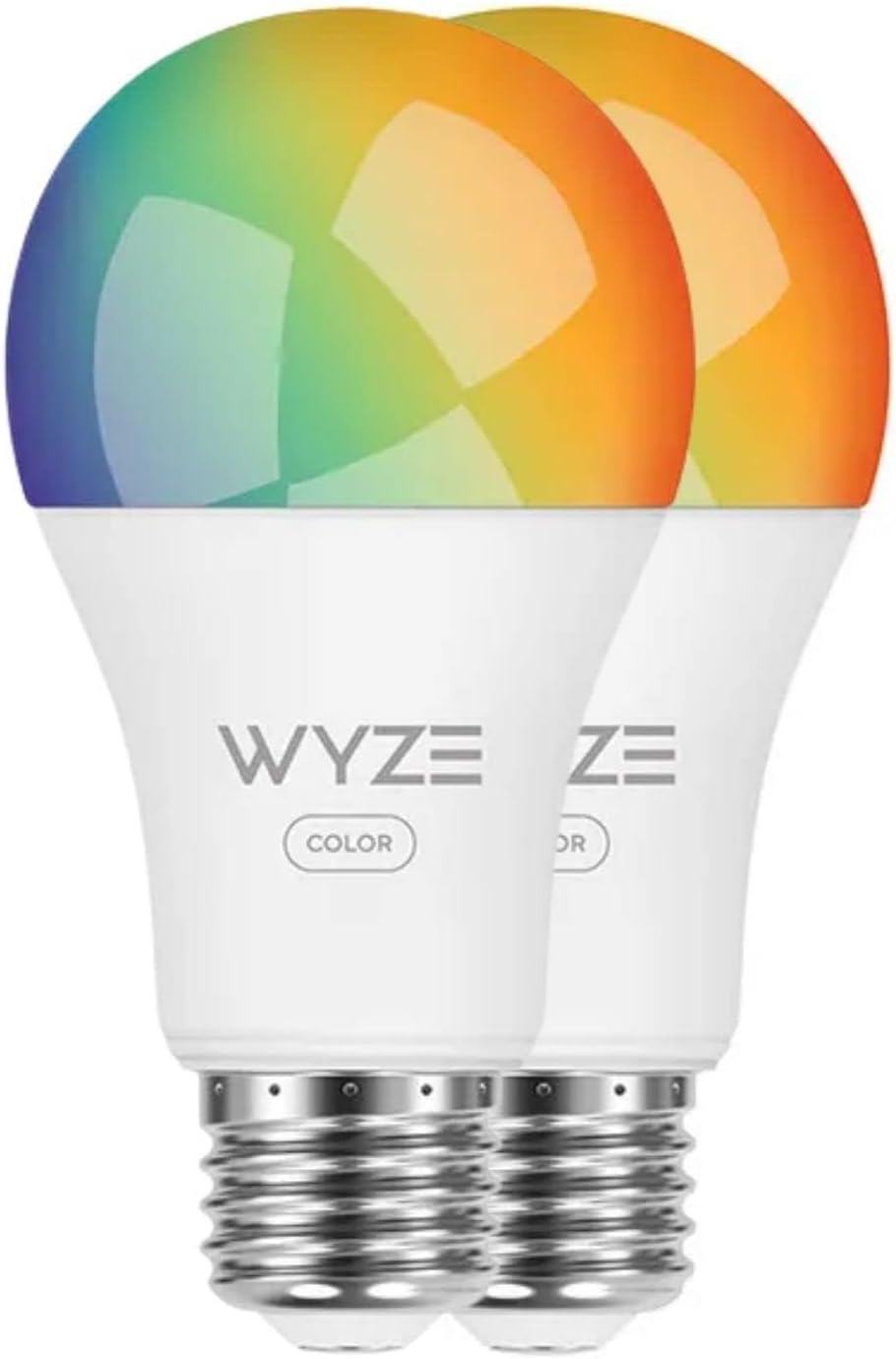
2. Wyze Bulb Color — Best Budget Full-Color Bulb
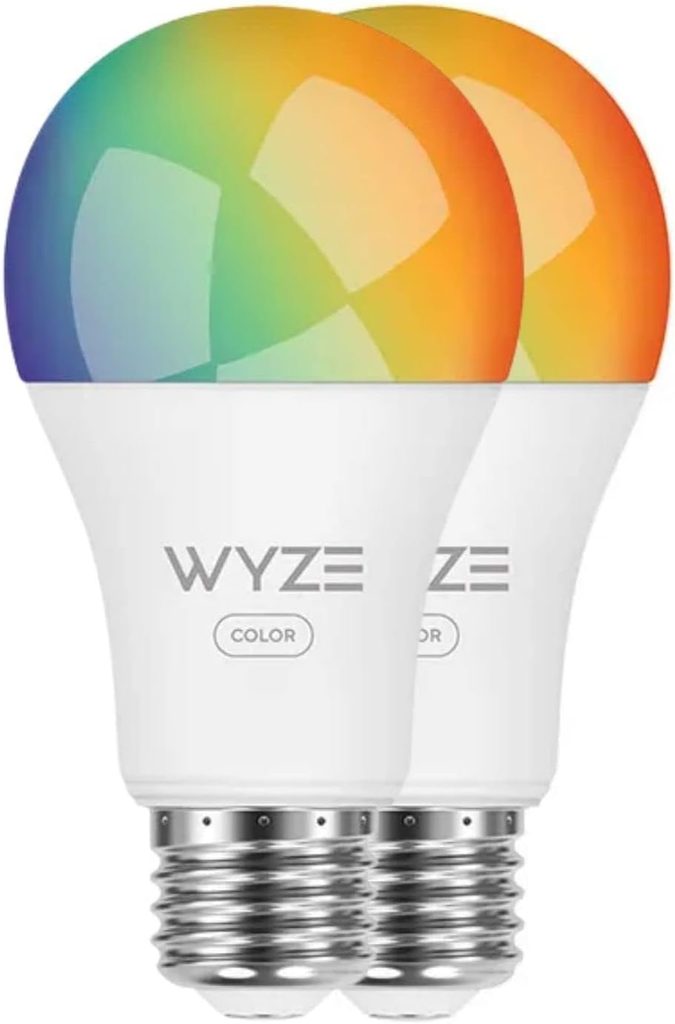
Typical price: $16.50 per bulb · Works with: Alexa, Google Home · Hub required: No
Wyze built its reputation on stripping products down to what people actually use and pricing accordingly — the same philosophy behind the Wyze Plug we recommended in our smart plugs guide. The Wyze Bulb Color applies that formula here, and it holds up well.
You get full 16-million-color RGB output, tunable white, scheduling, and a vacation mode that randomizes on/off patterns convincingly — all through the same Wyze app that millions already use daily for the brand’s security cameras. Setup is quick, the app is mature and well-maintained, and Alexa/Google integration is dependable.
Where it saves money is in build polish rather than core function — the housing feels slightly more basic than WiZ’s, and color accuracy at the extreme ends of the spectrum is a touch less refined. In everyday use across a living room or bedroom, most people won’t notice the difference.
The one drawback: no HomeKit or Matter support, and no indication that’s coming — Wyze has stayed Alexa/Google-focused across its product line.
Best for: Budget-conscious buyers who already use other Wyze products, or simply want full color at the lowest reasonable price.
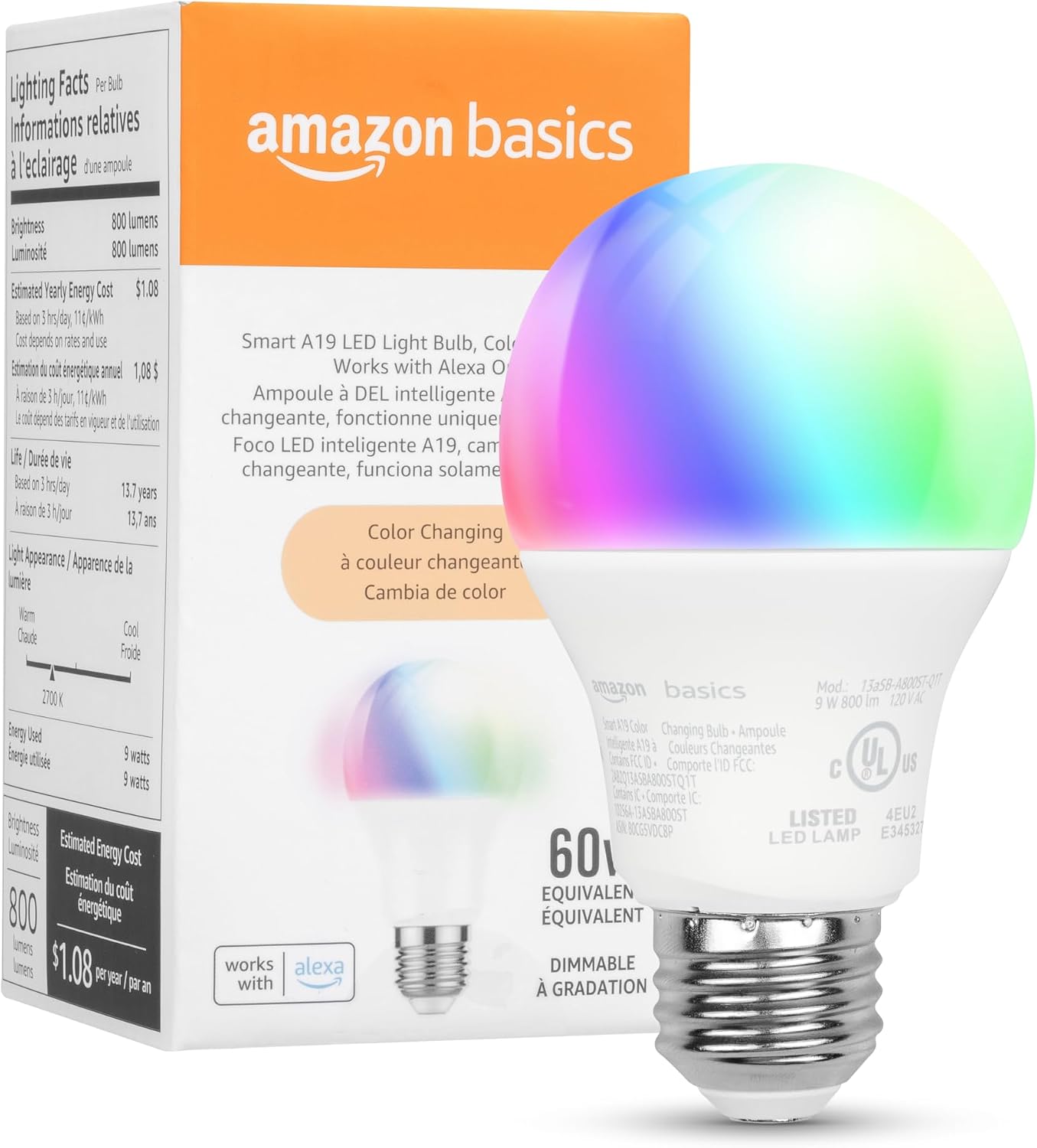
3. Amazon Basics Smart Color Bulb — Best for Alexa Households
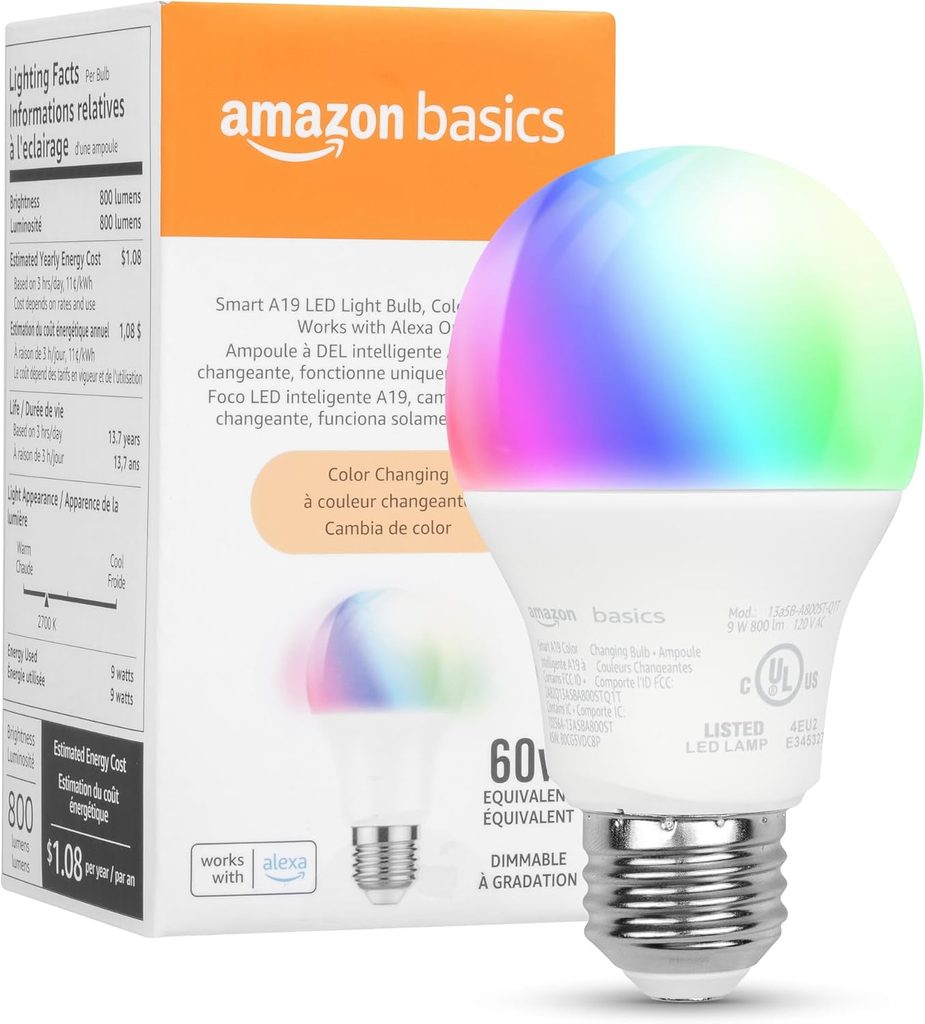
Typical price: $10–$14 per bulb · Works with: Alexa only · Hub required: No
Following the same pattern as the Amazon Smart Plug in our plugs guide, Amazon’s own-brand smart bulb trades cross-platform flexibility for the smoothest possible setup within its own ecosystem.
If your home already runs on Echo devices, this bulb is often discovered and added automatically the moment you screw it in — sometimes without opening an app at all. Routines and voice commands execute with none of the occasional lag third-party bulbs can show when talking to Alexa’s cloud, and the price sits comfortably in the middle of this list.
The trade-off is exactly what you’d expect: no Google Home, no Apple Home, no standalone app for households that might switch ecosystems later. It’s a specialist choice, not a universal one.
The one drawback: committing to this bulb is committing to Alexa specifically — there’s no fallback if your household’s voice assistant preference ever changes.
Best for: Households already fully invested in Alexa who want the least friction possible.
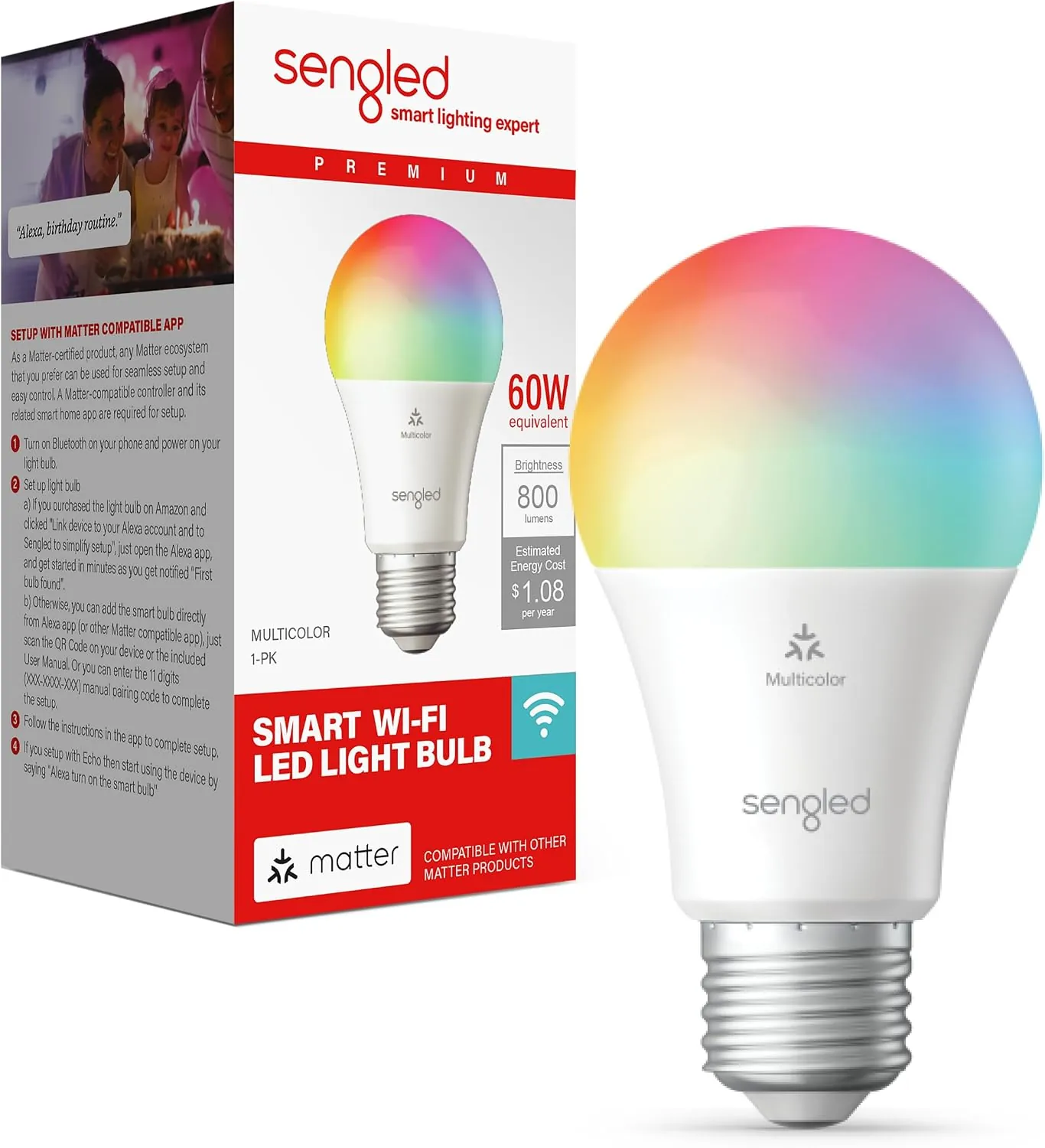
4. Sengled Smart LED Multicolor — Simplest App Experience
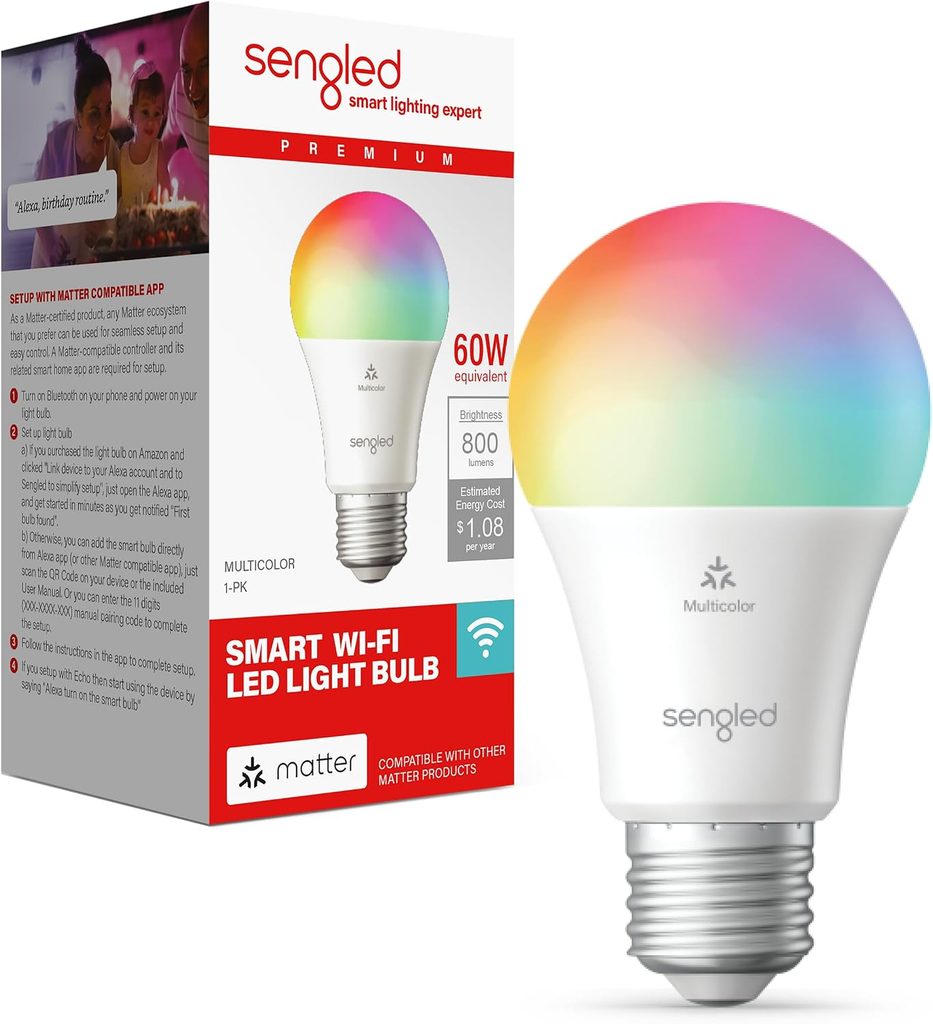
Typical price: $14–$17 · Works with: Alexa, Google Home · Hub required: No
Sengled has quietly been in the smart bulb business longer than most competitors on this list, and that experience shows up in one specific area: the app is refreshingly uncluttered. Where some budget bulb apps bury basic controls under several menus, Sengled’s interface puts brightness, color, and scheduling one tap away.
Light output is solid rather than spectacular — good brightness ceiling, respectable color accuracy, smooth dimming — without quite matching WiZ’s color vibrancy at the top end. What Sengled does particularly well is reliability over time; owner reports consistently mention bulbs still performing exactly as expected years into ownership, which matters more than a marginally wider color gamut for most buyers.
The one drawback: the color rendering, while good, isn’t quite as punchy as our top two picks — a minor concern for most living spaces, more noticeable if you’re building elaborate color scenes.
Best for: Buyers who prioritize a dead-simple app and long-term reliability over maximum color vibrancy.
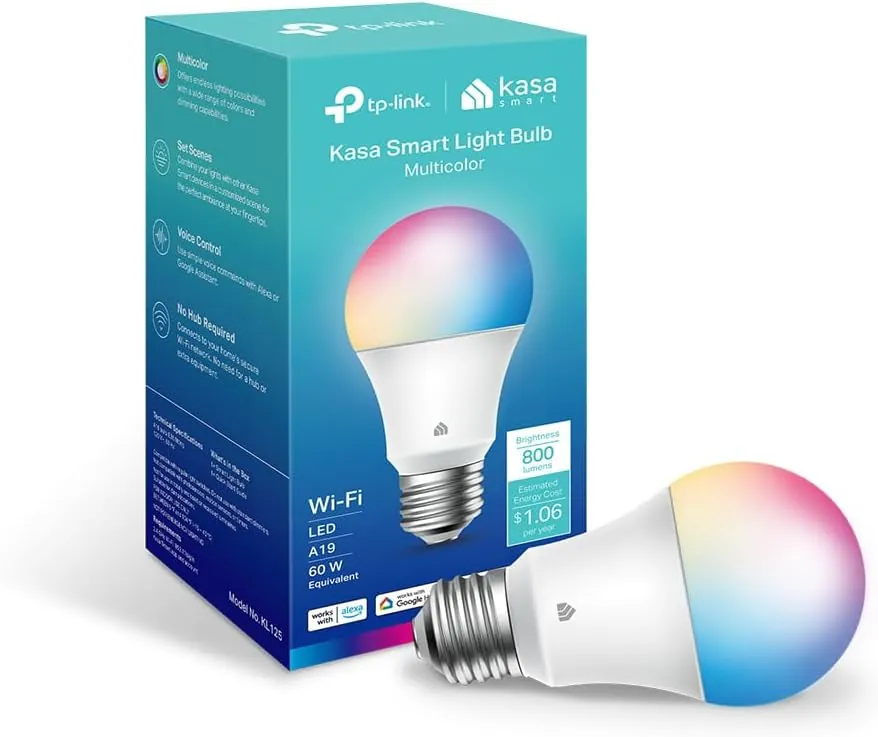
5. TP-Link Kasa KL125 — Best for Existing Kasa Households
Typical price: $13–$16 · Works with: Alexa, Google Home, SmartThings · Hub required: No
If you already own Kasa smart plugs from TP-Link — and given how often we recommend them, there’s a decent chance you do — the KL125 bulb slots directly into the same Kasa app, the same device groups, and the same automations you’ve already built.
That ecosystem consistency is the real selling point here. Beyond it, the KL125 performs solidly: full color range, tunable white, energy usage tracking (a nice touch most bulb-only brands skip), and the same dependable cloud infrastructure that makes Kasa plugs so consistently recommended across the smart home review space.
The one drawback: on pure light quality alone, it doesn’t quite match WiZ or Govee — this pick’s value is really about ecosystem consistency rather than being the single best bulb in isolation.
Best for: Households already using Kasa plugs or switches who want everything managed from one app.
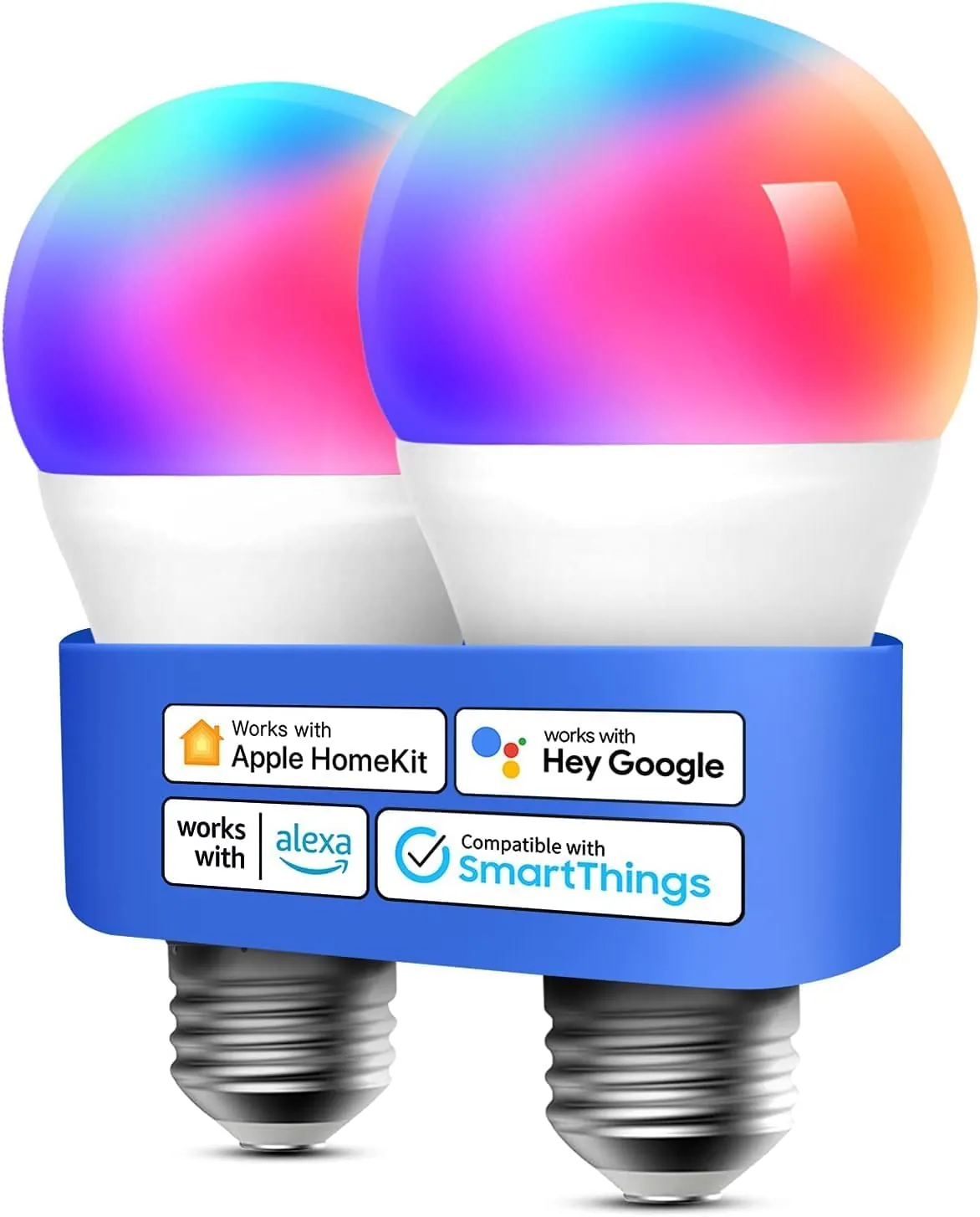
6. Meross Smart Wi-Fi LED Bulb — Best Matter Pick
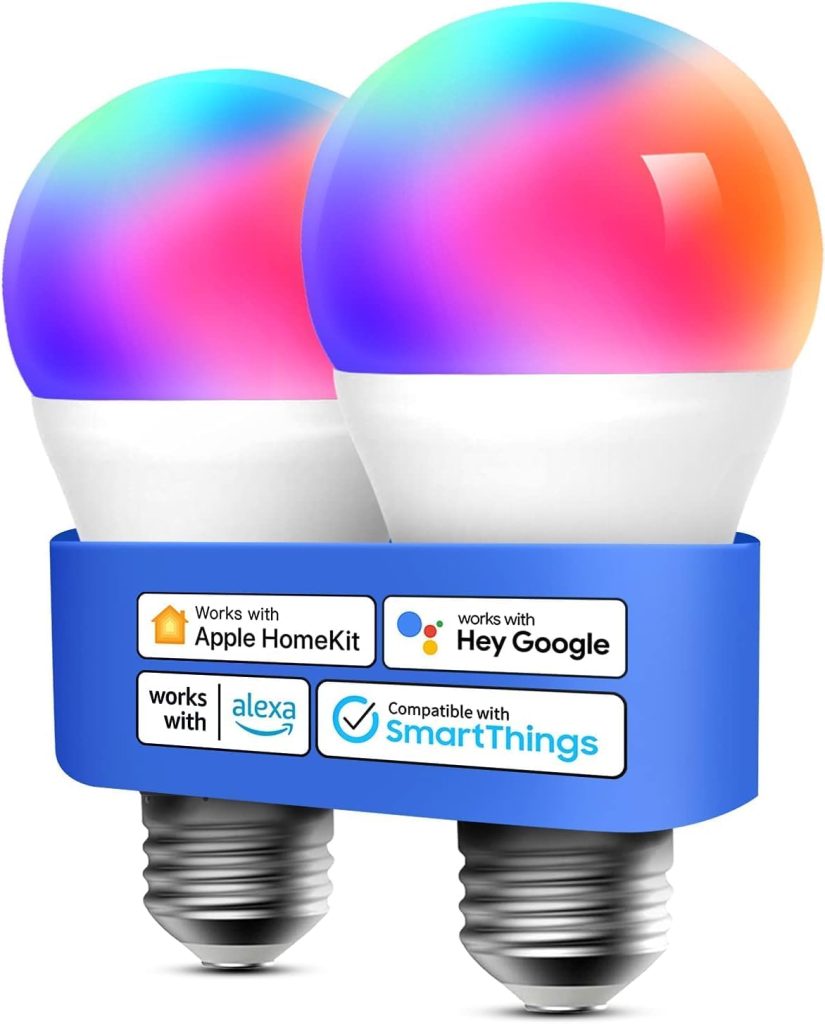
Typical price: $15–$18 per bulb · Works with: Matter, Apple Home, Alexa, Google Home, SmartThings · Hub required: No
Following the same value pattern as the Meross Smart Plug Mini in our plugs guide, Meross brings genuinely affordable Matter certification to smart bulbs — a category where Matter-certified options have historically carried a real price premium.
Being Matter-certified means this bulb works natively across Apple Home, Alexa, Google Home, and SmartThings simultaneously, without needing separate versions or workarounds. For more on what that actually means in practice, see our explainer on Matter. Beyond the certification, the bulb itself performs competently — solid color range, reliable dimming, and Meross’s typically dependable app experience.
The one drawback: as with most Matter lighting at this price point, you’ll get the best experience if you already own a Thread border router (a recent Apple TV, HomePod mini, or newer Echo) — though the bulb functions fine over standard Wi-Fi even without one.
Best for: Apple households or anyone wanting Matter’s cross-platform flexibility without paying a significant premium.
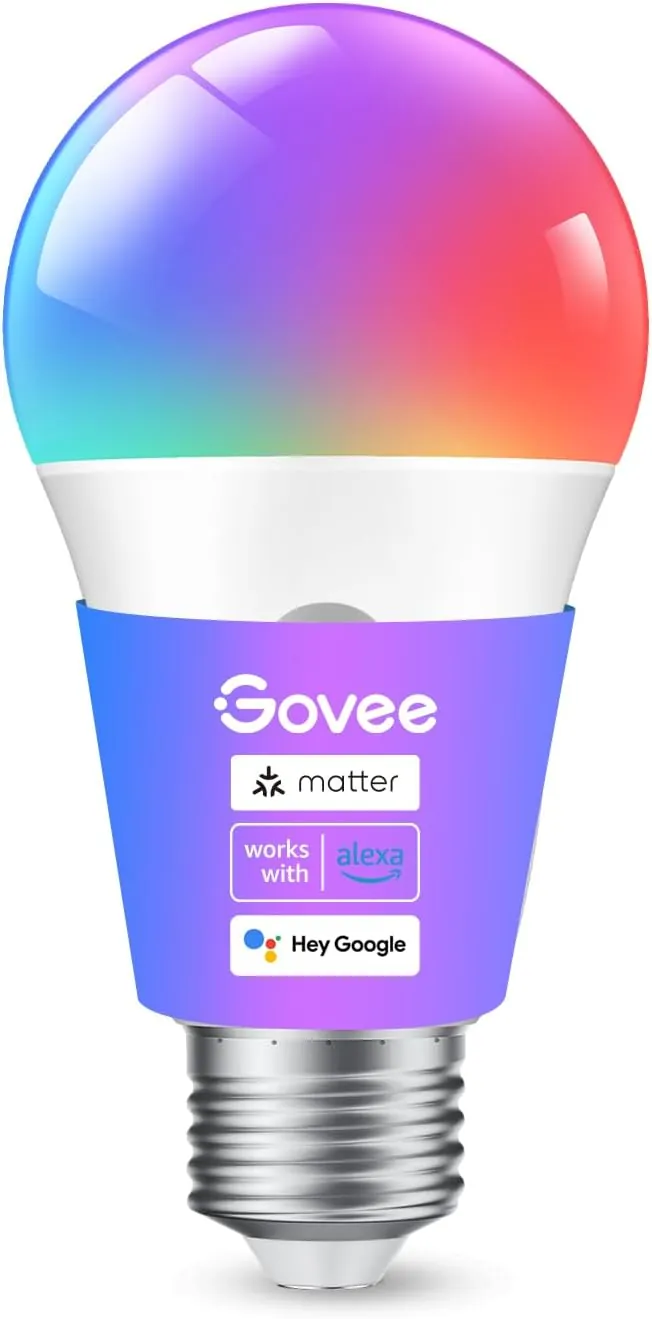
7. Govee Smart Light Bulb — Best for Vivid Color and Music Sync
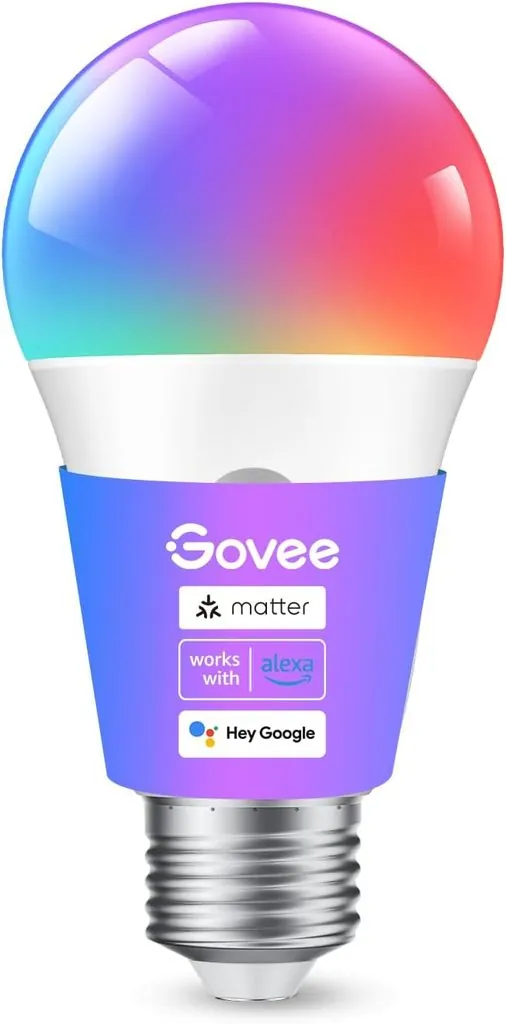
Typical price: $8–$15 per bulb · Works with: Alexa, Google Home, Govee Home app · Hub required: No
Govee built its name on LED strip lighting and gaming-adjacent color effects, and that DNA carries over clearly into its standalone smart bulbs. Color saturation here is the most vivid of any bulb on this list — genuinely eye-catching in a way that suits accent lighting, gaming setups, or anyone who wants their lighting to feel a little more expressive than a standard “warm white at 7pm” routine.
The Govee Home app — shared across the brand’s entire lighting lineup — includes music sync and scene presets that punch well above the price, features usually reserved for premium ecosystems. Scheduling, grouping, and basic automation all work reliably, and Alexa/Google integration is stable.
The one drawback: if your priority is subtle, natural-looking white light rather than color vibrancy, Govee’s white tuning is good but not the best on this list — WiZ edges it out there.
Best for: Gaming rooms, accent lighting, and anyone who wants their smart bulb to double as a mood-lighting centerpiece.
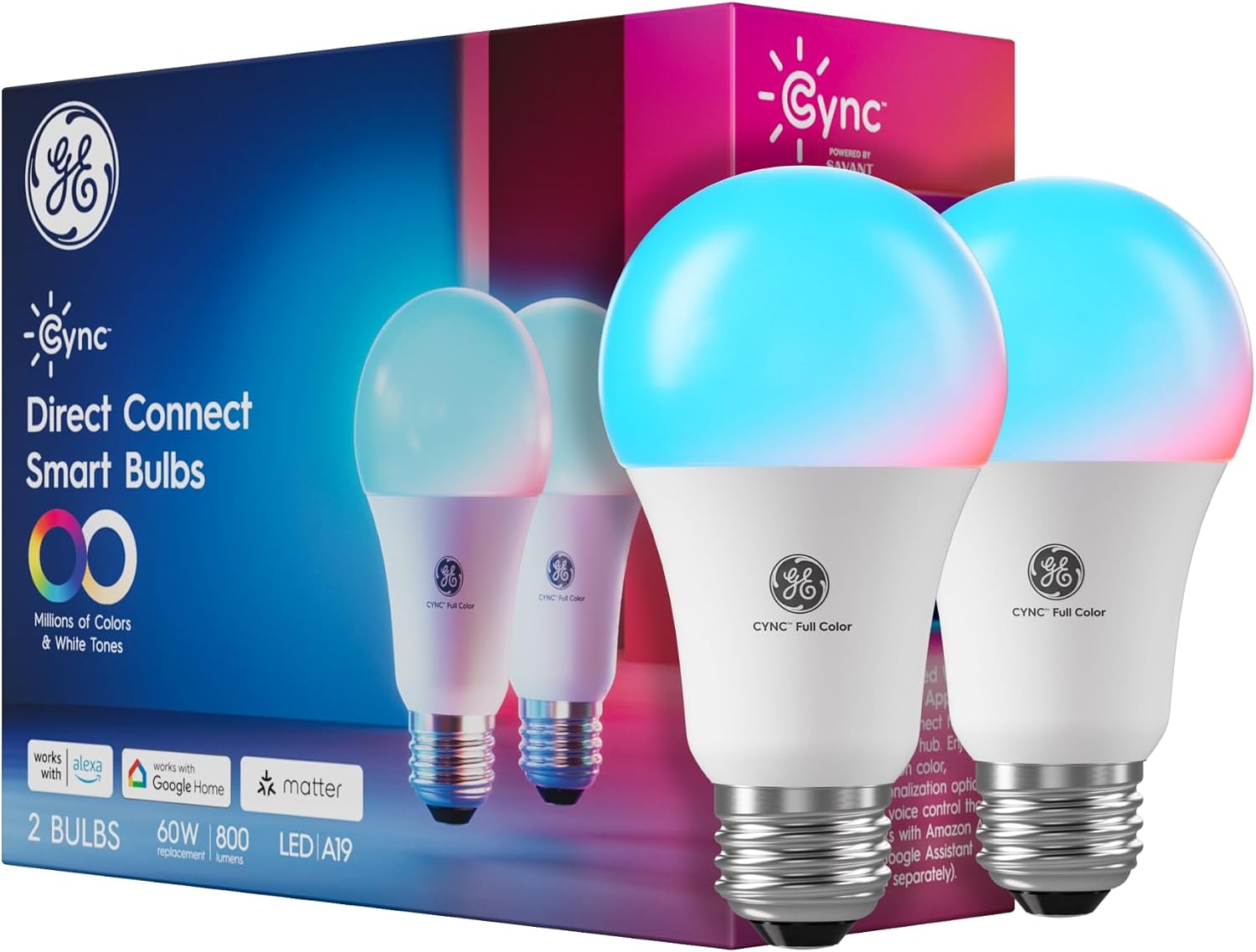
8. GE Cync Smart Bulb — Best Matter Alternative
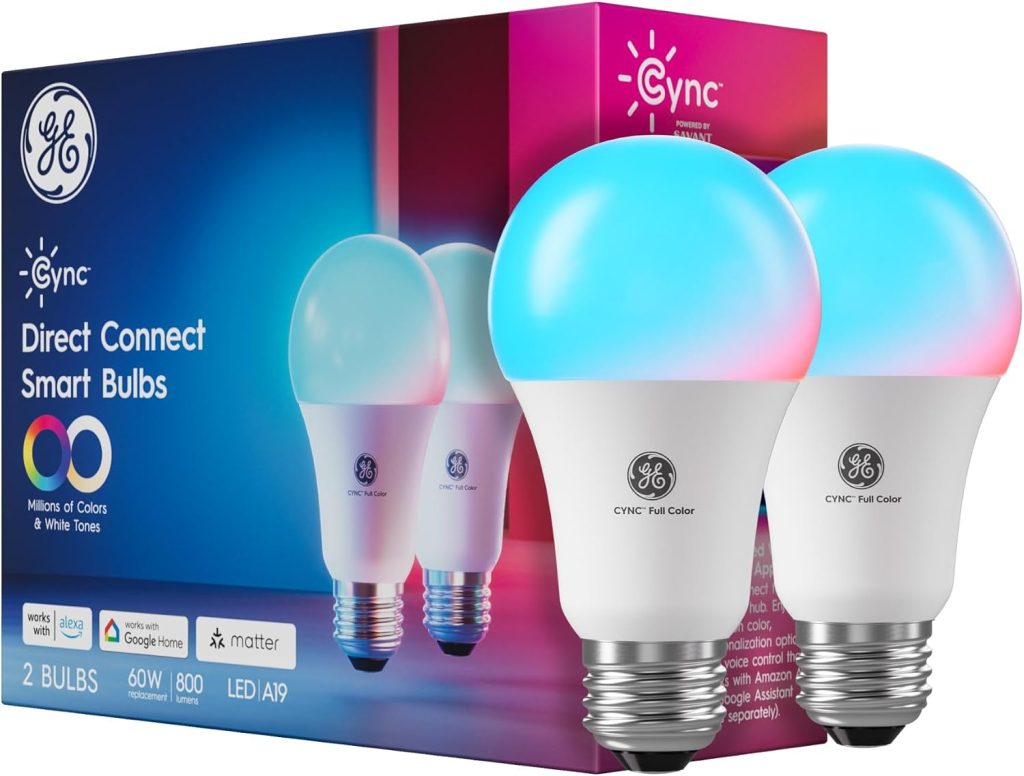
Typical price: $10–$14 · Works with: Matter, Alexa, Google Home, Apple HomeKit, SmartThings · Hub required: No
Pairing naturally with the GE Cync Smart Plug we recommend elsewhere on this site, the Cync bulb offers the same core appeal: genuine Matter certification from an established, widely-available brand, at a price that stays competitive with non-Matter alternatives.
Performance sits solidly in the middle of the pack — reliable color output, dependable dimming, and the same local-processing speed benefit that Matter devices generally offer over cloud-dependent competitors. GE’s retail presence (widely stocked at major hardware and home stores) also makes this an easy bulb to buy in bulk if you’re outfitting several rooms at once.
The one drawback: color vibrancy is good rather than exceptional — buyers prioritizing maximum saturation should look at Govee instead.
Best for: Multi-platform households and anyone wanting Matter bulbs from a widely-available, easy-to-restock brand.
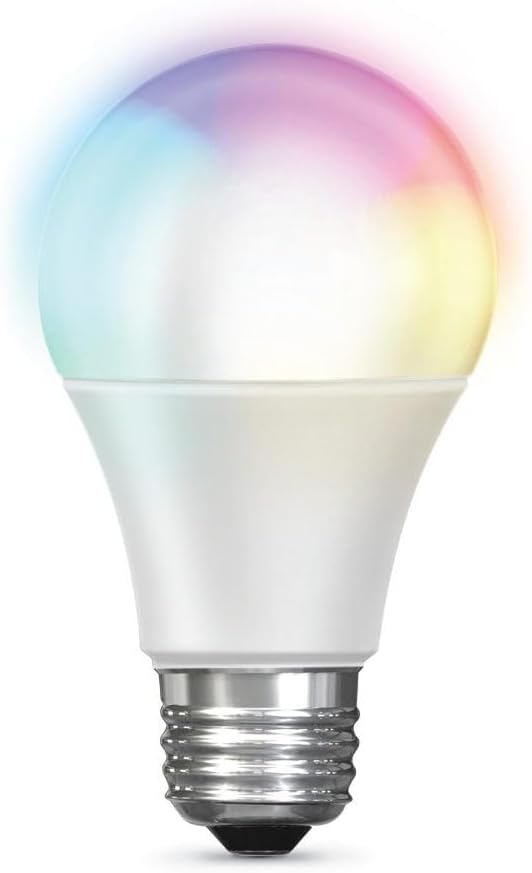
9. Feit Electric Smart Bulb — Widest Retail Availability
Typical price: $6–$10 per bulb · Works with: Alexa, Google Home · Hub required: No
Feit Electric has spent decades as a mainstream lighting brand sold in Costco, Home Depot, and Lowe’s — and its smart bulb line benefits from that same everywhere-you-look availability, which matters more than it sounds when a bulb burns out or you need a fourth one in a hurry.
The bulb itself is a competent, no-surprises performer: solid brightness, reasonable color accuracy, functional scheduling through the Feit Electric app. It won’t win a color-vibrancy comparison against Govee or WiZ, but it does everything a smart bulb needs to do reliably, from a company that isn’t going anywhere.
The one drawback: the companion app is functional but noticeably less polished than the dedicated smart-home-first brands on this list.
Best for: Buyers who want to pick up smart bulbs during a regular hardware store run rather than ordering online.
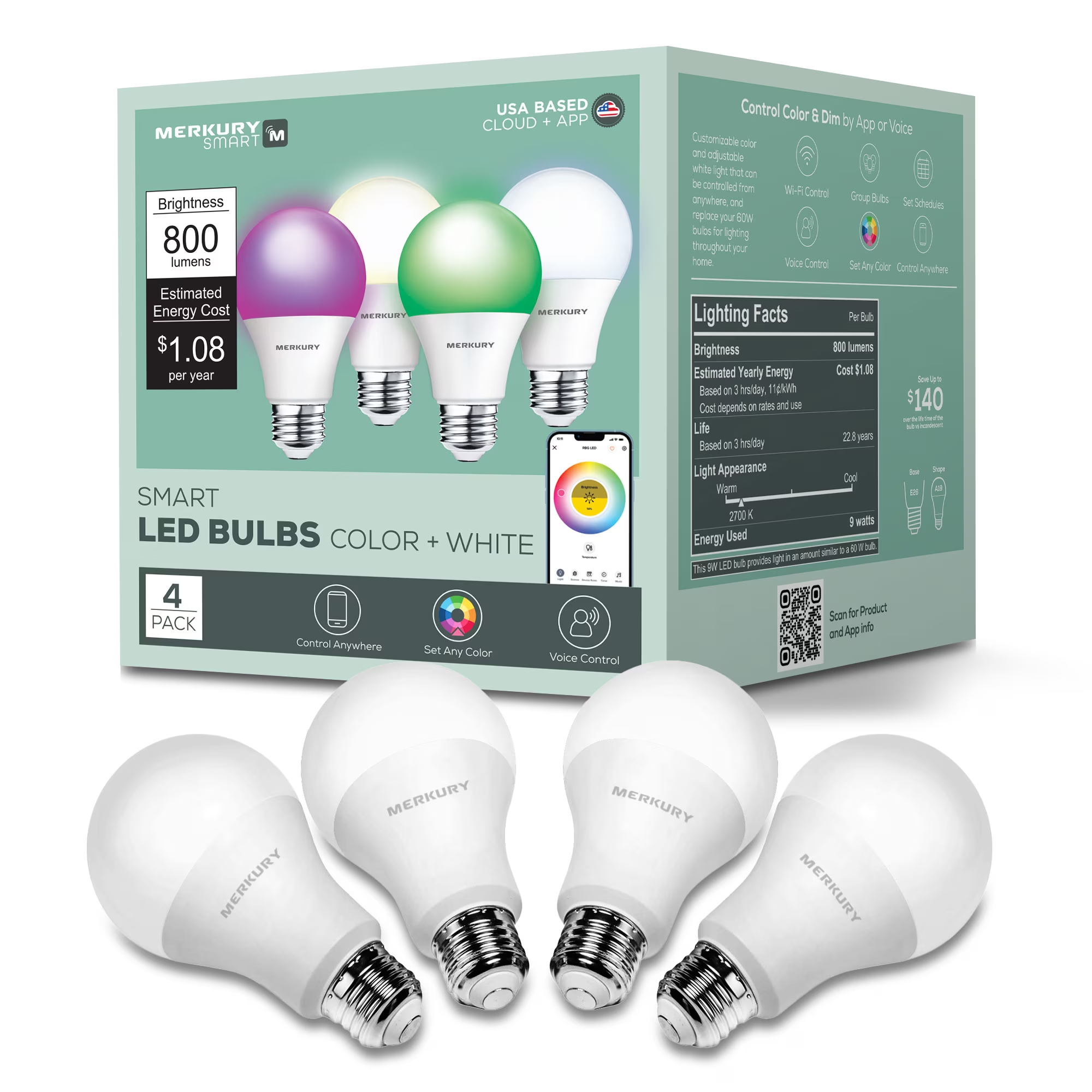
10. Merkury Innovations Smart Bulb — Cheapest Entry Point
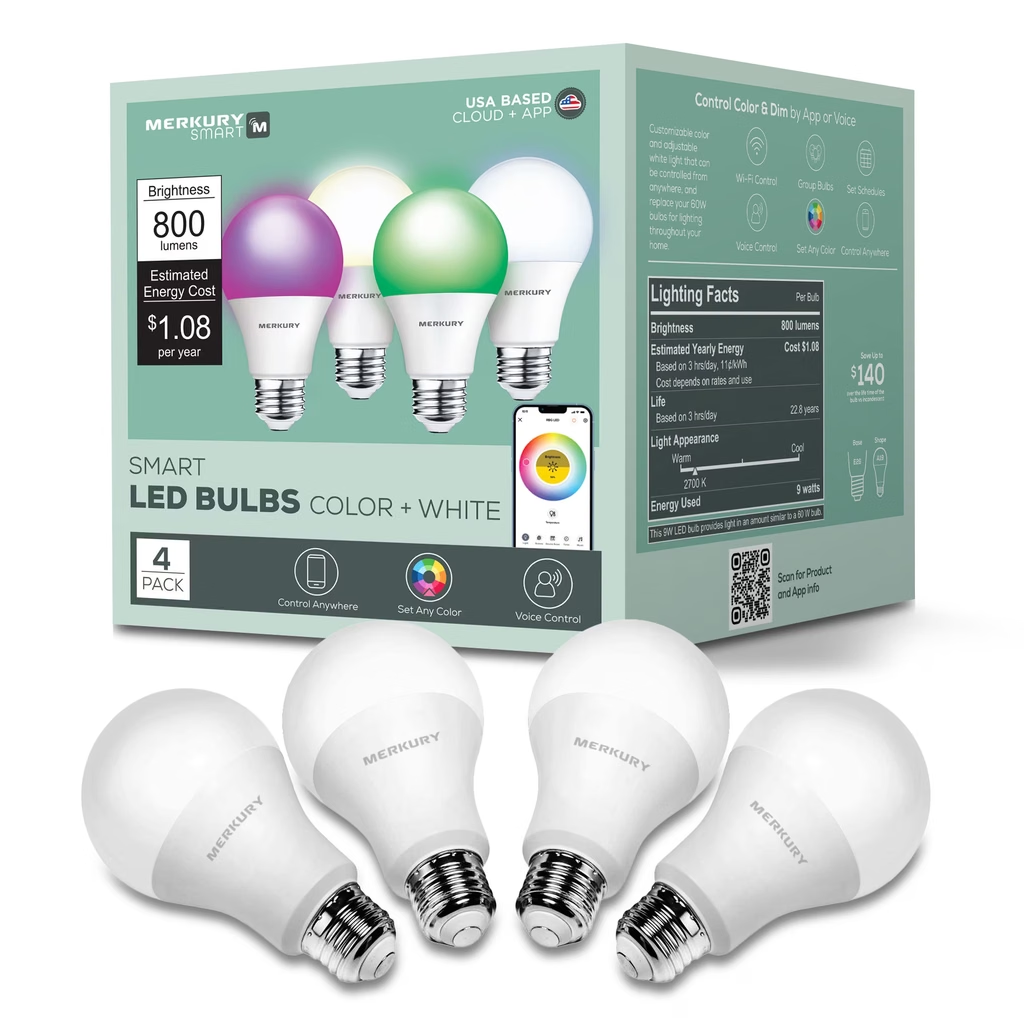
Typical price: $6–$9 · Works with: Alexa, Google Home · Hub required: No
For under $10, the Merkury Innovations bulb (widely sold at Walmart and Target) is the cheapest legitimate entry into color-changing smart lighting on this list — “legitimate” being the key word, since it carries real certification and comes from an established consumer electronics brand rather than an anonymous marketplace listing.
Functionality covers the essentials: color changing, tunable white, basic scheduling, and stable (if unremarkable) Alexa and Google Home integration through the Geeni/Merkury app. This is the bulb to buy when you want to test whether smart lighting is even for you, or when you need six bulbs for a whole-apartment refresh without spending $100+.
The one drawback: build quality and app polish are noticeably more basic than every other entry on this list — acceptable at this price, but don’t expect WiZ- or Govee-level refinement.
Best for: First-time smart bulb buyers and whole-home budget deployments where per-unit cost matters most.
What to Look for Beyond the Price Tag

Color-changing vs. white-only
Full-color (RGB) bulbs cost a few dollars more than white-only or “tunable white” bulbs, but the flexibility is usually worth it even if you mostly stick to white light day-to-day — the option to shift to warm evening tones or the occasional color scene adds real versatility for a small premium.
Brightness (lumens), not just watts
Smart bulbs are LEDs, so “watts” is a legacy comparison that no longer reflects actual brightness. Look at lumens instead — a standard living room lamp typically wants 800–850 lumens (roughly equivalent to an old 60-watt incandescent), while accent or mood lighting can go lower.
Dimming quality matters more than the spec sheet suggests
Cheap bulbs often dim unevenly, flickering or jumping in brightness rather than fading smoothly. This is genuinely difficult to assess from a listing alone, which is why we weighted verified owner feedback on dimming behavior heavily in our rankings above.
Wi-Fi vs. Matter
Every bulb on this list connects via Wi-Fi at minimum; several also carry Matter certification. If you’re unsure which matters for your household, our full explainer on Matter breaks down exactly what the certification does and doesn’t change in practice.
App-only vs. voice-assistant-native
Every bulb here works with at least one major voice assistant, but the smoothness of that integration varies — Amazon’s own bulb, unsurprisingly, integrates most seamlessly with Alexa specifically, while Matter-certified options like Meross and GE Cync offer the broadest simultaneous compatibility.
Common Mistakes When Buying Budget Smart Bulbs
Buying color bulbs for spaces that only need white light. If a hallway or closet will realistically only ever run on white light, a cheaper white-only or tunable-white bulb saves a few dollars per fixture with zero functional loss.
Ignoring the base type. Most bulbs on this list ship as standard E26/E27 (the common household screw base), but always double-check against your actual fixture before ordering — this is the single most common return reason across this product category.
Forgetting the “dumb switch” problem. A smart bulb loses power and goes offline the moment someone flips its wall switch off. If a fixture is on a switch your household uses habitually, either commit to leaving that switch permanently on, or solve it with a smart switch instead.
Buying uncertified marketplace bulbs to save two dollars. The gap between a $9 Merkury bulb and a $4 anonymous listing isn’t just brand loyalty — it’s UL/ETL certification, an actual support team, and cloud servers likely to still exist next year.
Mixing ecosystems without a plan. As with every device category on this site, decide your primary platform (or lean toward Matter-certified options) before buying your second or third bulb, to avoid ending up with lights split across incompatible apps.
Frequently Asked Questions
Do I need a hub for any of these bulbs?
No — every bulb in this guide connects directly to your home Wi-Fi network with no separate hub or bridge required. This is specifically what separates this list from premium systems like Philips Hue, which require a $60 bridge purchase to unlock full functionality.
Can I mix brands of smart bulbs in the same room?
Yes, generally without issue — most brands’ apps and Alexa/Google Home integrations happily coexist, letting you group bulbs from different manufacturers into the same voice command or scene. The main friction point is managing multiple separate apps if you’re not using a voice assistant as the unifying layer; Matter-certified bulbs avoid this entirely by working through one shared platform app.
How long do smart bulbs typically last?
Many smart LED bulbs have rated lifespans in the 15,000–25,000-hour range. That rating refers primarily to LED life; in real-world use, the electronics, firmware, app support, or connectivity may become the limiting factor first.
Will smart bulbs work if my Wi-Fi goes down?
Standard Wi-Fi bulbs typically retain their last manual state during an outage but lose remote/voice control until connectivity returns; physical wall-switch control (if the switch stays on) still works normally. Matter-certified bulbs on this list (Meross, GE Cync) offer better resilience here, since Matter’s local-processing design keeps core automations running even without an internet connection.
Are budget smart bulbs as bright as regular bulbs?
Yes — brightness depends on the lumens rating, not on whether a bulb is “smart.” Every bulb recommended here is available in standard household brightness ranges (typically 800 lumens for a soft-white equivalent), so you’re not sacrificing brightness by choosing a smart, budget-friendly option.
Do smart bulbs use more electricity than regular LED bulbs?
Only marginally — the Wi-Fi radio inside a smart bulb draws a small amount of standby power (roughly 0.5–1.5 watts) even when the bulb is switched “off” via the app, since it needs to stay connected to receive commands. Over a year, this typically adds no more than a dollar or two per bulb to your electricity bill.
Can I use these bulbs outdoors?
No — none of the bulbs in this guide are rated for outdoor or damp-location use. Standard household smart bulbs are designed for indoor fixtures only; outdoor smart lighting requires dedicated weatherproof fixtures, a different product category entirely.
Which bulb should I buy if I’ve never owned a smart bulb before?
Start with the Philips Smart Lighting WiZ A19 — it’s the most consistently well-reviewed across every category we evaluated (setup ease, color quality, app experience), and at $10–$18 it’s a low-risk way to find out whether smart lighting earns a permanent place in your home before expanding to more rooms.
Our Verdict
The under-$20 smart bulb category has reached a point where “budget” no longer means “compromised.” For most buyers, the Philips Smart Lighting WiZ A19 remains the strongest all-around choice — reliable, vividly colored, and genuinely easy to live with day to day.
If price is the deciding factor above everything else, the Merkury Innovations Smart Bulb gets you into color-changing smart lighting for under $10 without cutting the corners that make anonymous marketplace bulbs risky. And if you’re building toward a multi-platform, future-proof setup, the Meross and GE Cync Matter-certified picks are the smartest long-term bets on this list.
Whichever you choose, pair it with a smart plug for a lamp and you’ve built the two most useful smart home purchases most people ever make — for well under $30 combined.

Ryan Hayes
Founder & EditorRyan Hayes is the founder and editor of Smart Space Advisor, where he researches and evaluates smart home technology to help readers make informed buying decisions. His work focuses on smart security, video doorbells, smart plugs, lighting, and connected-home platforms including Matter, Alexa, Google Home, and Apple Home. By combining product research, manufacturer documentation, feature comparisons, and real-world considerations, Ryan aims to cut through technical jargon and provide practical, straightforward advice about which smart home products offer genuine value.